Part of the GCRI Series on Democracy and Global Catastrophic Risk.
Arguably, news media and democratic participation should be closely related: news media informs citizens on how to participate. In practice, however, this seldom occurs. Instead, media coverage mostly informs citizens on what already happened, especially actions taken by distant political elites, with no guidance on what citizens can do. Even high-minded work such as the Society of Professional Journalists’ Code of Ethics says nothing about facilitating citizen participation in democracy. It’s as if it’s outside the scope of what the news media is supposed to do.
This is a problem. It’s a problem for democracy, weakening citizen self-governance. It’s also a problem for societal issues including global catastrophic risk: evidence shows that citizen participation can lead to better policy outcomes.
This article tells the story of how we ended up with such a detached news media and proposes an alternative, drawing on the decision theory concept of value of information. Compared to my previous articles on democratic participation (1, 2, 3) and news media, this one says less about global catastrophic risk in order to focus on the understudied interface of news media and democratic participation. The implications for global catastrophic risk follow directly from my previous articles, especially on evidence that citizen participation can improve global catastrophic risk policy outcomes. The article also ties into my previous articles on corruption and government procedure.
The article does not address the ways in which civic activity can generate media coverage, such as via press releases and high-visibility protests, though this is an important part of the broader relationship between news media and democratic participation.
As with my other articles on democracy and global catastrophic risk, the focus here is on the United States, though much of it is also applicable to other countries.
Some History
In the 1800s, voting rights were limited, but the US nonetheless had a strong culture of democratic participation, as was observed by Alexis de Tocqueville in Democracy in America. Media historian David Ryfe argues that the era’s newspapers displayed this participatory culture. An example Ryfe cites is the 7 September 1860 issue of The New York Herald. The lead article (p.1, top-left corner) discusses a speech by presidential candidate Stephen Douglass, but it notably emphasizes the crowd at the speech as if citizens showing up was the important part. Another article on the same page contains a letter from a local political committee that closes with, “We remain your fellow citizens, on behalf of the State Committee.” These anecdotes invite readers to think of themselves as citizens connected to political campaigns and committees.
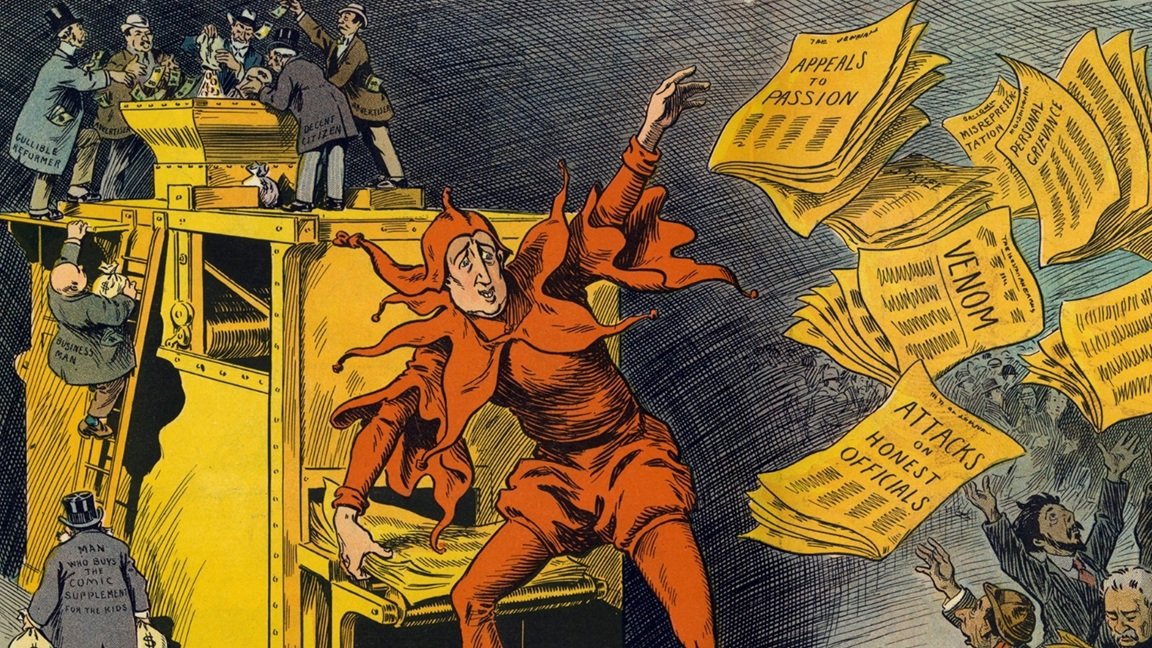
The civic orientation of newspapers faded in the late 1800s and early 1900s. A growing population and the Industrial Revolution made commercial mass media more profitable. This favored smaller numbers of large media outlets that appealed to mass audiences and advertisers alike by avoiding partisan politics and emphasizing non-political topics like crime and sports. Meanwhile, American civic culture gave way to a culture of expert professionalism, in part due to the niche professional needs of industrialism. Journalism also professionalized, taking on a detached, objective orientation that distanced itself from the citizenry and instead located itself within the political elite—no more “your fellow citizens” [1].
Then came Watergate. In the mid-1900s, the media largely functioned as a mouthpiece for the political elite. This began to change with 1960s counterculture and exploded with the 1970s Watergate scandal, in which The Washington Post played a central role in exposing Nixon’s misconduct. Since then, the news media has taken a more adversarial stance toward political authorities. Much of this has been good, especially investigative journalism to weed out corruption and other bad behavior. However, the new adversarial stance also includes a relentless focus on scandals and negativity. The combination of detachment from the citizenry, focus on elite politics, and constant negativity has fed a culture of citizen cynicism and disconnect from politics, contributing to the decline in democratic participation (and also a shift toward slower, more decentralized government procedures).
The post-1960s news media further contributed to the decline in democratic participation by platforming policy advocates—people like me. Starting around the 1960s, policy advocates shifted from a strategy of building mass citizen movements to a strategy of insider influence; this has been identified as a (perhaps the) primary cause of the decline in citizen participation. Participation in news media was (and still is) one way to pursue insider policy influence; citizens only “participate” as audience members [2]. While I am grateful for media coverage of GCRI, I have come to appreciate its limitations.
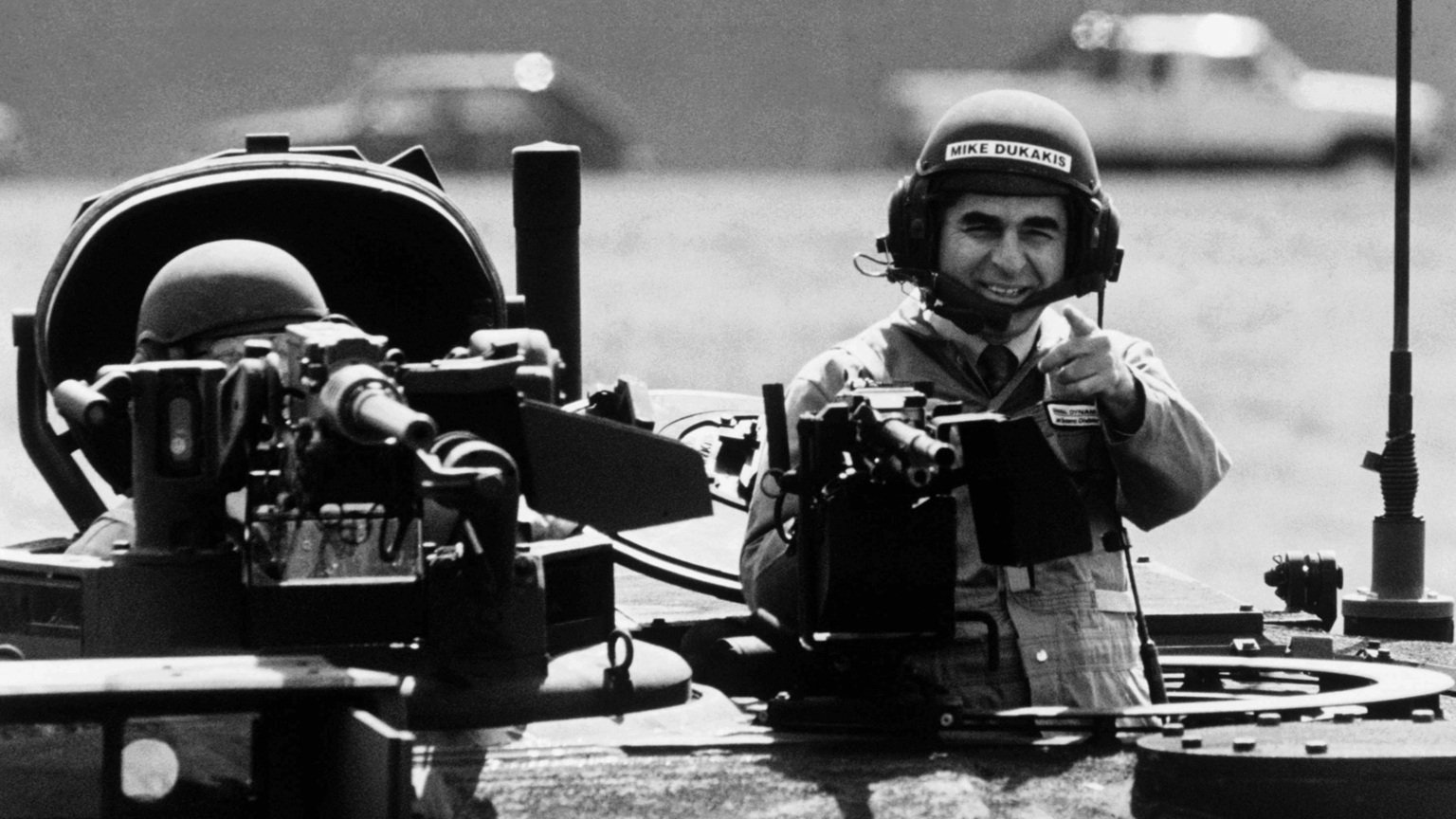
A rare push for more democratic participation was the 1990s movement for public journalism, also known as civic journalism. It was prompted by the 1988 presidential election, a shallow affair in which media coverage dwelled on trivialities like the appearance of candidate Michael Dukakis in a tank (shown above). Voter turnout likewise hit a historical low. Some journalists were embarrassed by it and resolved to do better. The public journalism movement sought to refocus media coverage on substantive citizen concerns and encourage citizen participation in civic affairs. It gained substantial traction across hundreds of media outlets but fizzled out in the 2000s, apparently due to a lack of buy-in from journalists stuck in a norm of detached elite professionalism [3].
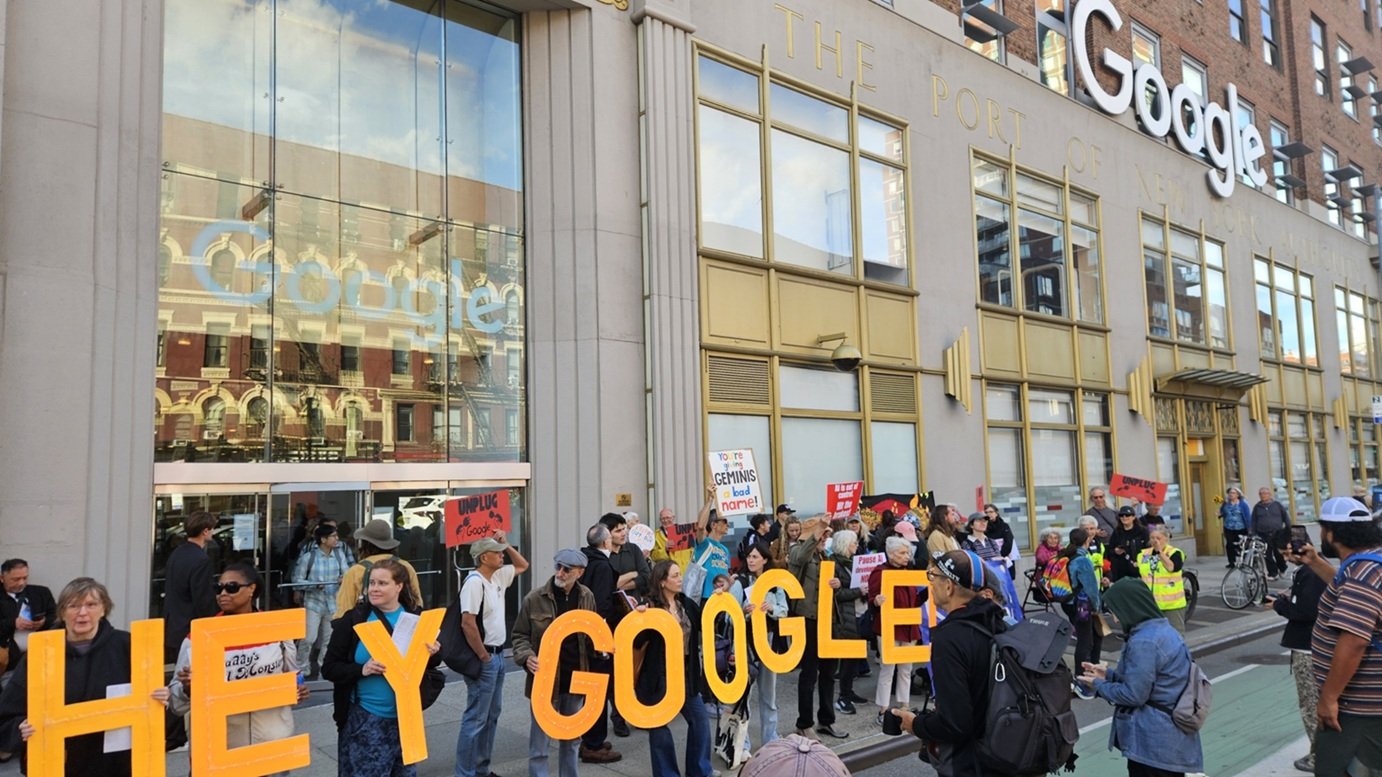
To be clear, the news media does cover citizen activity. For example, the 1980s nuclear peace movement generated extensive media coverage and inspired one of the largest television events in history, ABC’s The Day After. More recently, the media has covered data center protests. But it could do a lot more to encourage and facilitate citizen participation in democracy.
A Proposal: The Value of Civic Information
In decision theory, the term “value of information” indicates the amount of value a piece of information adds to one or more decisions. Prior GCRI research has studied the value of information for decisions about global catastrophic risk, such as information about the trajectory of a near-Earth asteroid adding value to decisions about space missions to deflect the asteroid away from Earth. Arguably, information that does not contribute to decision-making holds zero value; information that manages to worsen decision-making (e.g., misinformation) can hold negative value.
Citizen participation in civic affairs requires three types of information. First, citizens need background information on civic affairs to help people decide which affairs they want to participate in and what stance they want to take. Importantly, this information needs to be accurate and morally sound so that people’s stances tend toward some sort of standard of moral value; this can include debate about different moral views. Second, citizens need information on how to get involved. Third, and most subtly, citizens need information indicating that participation in civic affairs is a good and worthy thing for them to do.
Let us define the value of civic information as the amount of value a piece of information adds to citizen decisions about participating in civic affairs.
In my research for this article, I was not able to find prior work applying value of information theory to news media. The closest I’ve seen is the concept of the “information-action ratio” in Neil Postman’s 1985 book Amusing Ourselves to Death. Postman’s information-action ratio is essentially the inverse of a signal-to-noise ratio: a high information-action ratio indicates a lot of information needed to guide a small amount of action, which is roughly comparable to a low value of information. However, the book does not develop the idea in any depth; it is mainly a (quite intriguing) criticism of television news.
Some Examples
A classic example is a 1992 public journalism project by The Witchita Eagle newspaper. It published a series of articles on select policy issues, covering the nuances of the issues and efforts to address them. The articles included stories of people getting involved and making a difference. The Eagle also published guidance for getting involved, including lists of relevant civic organizations and their contact info and notices of upcoming events. The project includes all three types of information needed for citizen participation, giving it a relatively high value of civic information; it likewise resulted in thousands of local citizens getting involved [4].
A smaller recent example is a July 2026 Streetsblog NYC article on proposed repairs to a bike path in northern Manhattan. Streetsblog NYC is a news website that covers transportation issues from an anti-car, pro-bike-transit-pedestrian perspective, which I wholeheartedly agree with for reasons including but not limited to climate change. The July article is notable for including information about an upcoming event for a civic group campaign advocating for repairing the bike path. Readers are invited to attend the event as a means of getting involved.
Another recent example is a May 2026 article in The Kansas City Defender, an online news site for the Black community in Kansas City. The article provides in-depth discussion of the Kansas City National Security Campus, which manufactures nuclear weapons components, and provides information about an upcoming public hearing on the continued operations of the facility. The article is another good example of actionable civic information in news media coverage.
The examples are notable for taking different approaches to policy advocacy. The Eagle sought to maintain a certain neutrality: it was not neutral about the importance of democratic participation and the need to have quality information on major issues, but it avoided imposing its own views on the issues. In contrast, Streetsblog NYC and the Defender are clearly on one side of their respective issues. In my opinion, media outlets should feel comfortable taking morally sound stances on the issues, for example in favor of reducing global catastrophic risk. However, outlets that wish to maintain neutrality on the issues can still provide information of value to civic participation.
For emphasis, because this seems to be a common point of confusion: Providing information on how citizens can get involved does not require taking a stance on the issues. These are different types of things. One can take a stand without providing any information on how to get involved, as in common opinion articles. One can also provide information on how to get involved without taking a stand, such as by saying something like “concerned citizens, regardless of their views, can contribute to the issue by doing X, Y, and Z”.
Also of note, The Witchita Eagle, Streetsblog NYC, and The Kansas City Defender are all local news outlets. The highest value of civic information will often come from local news because opportunities to participate in civic affairs tend to be concentrated in a citizen’s local area, such as to advocate for a bike path or attend a public hearing. The recent decline of local news is a major impediment to providing people with civically valuable information. Conversely, getting more people active in local civic affairs may help to revive some demand for local news, and for other types of quality news outlets.
Whatever the format, news media promoting civic participation may benefit from public and/or philanthropic financing. This would enable media outlets to promote civic participation even if they don’t have large enough audiences to sustain themselves commercially. It would also avoid the perverse incentive of commercial media earning higher profits by keeping people glued to their televisions and computer screens instead of getting out and participating, among other downsides of commercial media. This is not a silver bullet solution to democratic decline or societal issues like global catastrophic risk, but it could substantially help.
***
[1] My primary source for this is Jay Rosen, What Are Journalists For?, Chapter 2, especially around pages 69-70. On the broader cultural reorientation from civics to professionalism, see Thomas Bender, Intellect and Public Life, nicely reviewed here.
[2] See Theda Skocpol, Voice and inequality, discussing James Fallows, Breaking the News.
[3] For a good overview of public journalism, I recommend Tanni Haas and Linda Steiner, Public journalism: A reply to critics.
[4] See Davis “Buzz” Merritt, Public Journalism and Public Life, at pages 88-90. Merritt was editor of the Eagle and, along with Jay Rosen, an early pioneer of public journalism.
Image credit: Michael E. Samojeden