Part of the GCRI Series on Democracy and Global Catastrophic Risk.
How important is large-scale public participation for addressing global catastrophic risk? In an article last year on democratic participation, I claimed that it is very important, especially for achieving major policy change. However, I didn’t provide evidence for this.
Upon closer inspection: yes, there is a lot of evidence that democratic participation can be important for advancing policy on global catastrophic risk. Democratic participation can also have significant indirect effects, such as cultivating new civic leaders who go on to play important roles. This is in addition to the value of participation for strengthening democracy, which was the focus of my article from last year. Democratic participation is not the only factor in policy outcomes, but there is clear evidence that it can be very influential. The evidence covers policy activity on multiple global catastrophic risks across multiple decades, showing the broad and enduring value of democratic participation.
The evidence presented here is mainly from the US, plus a bit from Western Europe.
Nuclear War, 1977-1992
Nuclear weapons have been debated for as long as they have existed, but there was a surge in public activity that began in the late 1970s, peaked in the 1980s, and continued roughly until the last US nuclear weapons test detonation in 1992. Massive numbers of citizens in the US and western Europe protested against nuclear arms buildup and called for peace with the Soviet Union and Communist Bloc. Groups like Council for a Livable World, Physicians for Social Responsibility, and SANE had numerous active chapters across the US; in 1985, there were an estimated 8,000 active US peace groups [1]. Other civic groups, such as labor unions and religious communities, also played important roles. As one show of political strength, the movement organized a 1982 protest in which an estimated one million people marched from Central Park to the Untied Nations headquarters in Manhattan.
The 1980s nuclear peace movement coincided with dramatic progress in peace and nuclear arms control. Ronald Reagan was elected President in 1980 using hawkish, anti-Soviet rhetoric. His early policy stances suggested that he was seriously considering trying to fight and win nuclear war. The US and USSR were both building up their nuclear arsenals and conducting frequent test detonations. However, by the late 1980s and early 1990s, the Cold War ended, the Soviet Union was dissolved, nuclear disarmament was underway, and several new nuclear arms control treaties were negotiated (the CTBT, INF, START I, and START II).
Did the nuclear peace movement cause this progress? A close read of the history shows that it wasn’t the only factor, but it does deserve a lot of the credit. The massive grassroots activity was spread across the US, motivating many members of Congress to respond to their constituents and take action. The Reagan administration tried to push back, but eventually it felt compelled to tone down its rhetoric, embrace some arms control activities, and pursue détente with the Soviet Union. The movement even found a receptive audience in Moscow, prompting them to pursue a freeze in nuclear arms buildup in 1982 and a nuclear testing moratorium in 1984-1985 [2]. It is entirely plausible that, without the 1980s nuclear peace movement, a large-scale nuclear war may have occurred.
Climate Change, 2005-2022
Climate change has been a national issue since at least the 1988 James Hansen Senate hearing, but a major push began in 2005-2006. The disastrous 2005 Hurricane Katrina heightened concerns about climate change. In 2006, the film An Inconvenient Truth further raised the public profile of climate change and the US Climate Action Partnership (USCAP) was formed as a major initiative for US climate policy.
Unlike the 1980s nuclear peace movement, USCAP did not involve significant democratic participation [3]. Instead, it was structured as an “insider grand bargain”: a policy negotiation between large, business-friendly environmental groups and the fossil fuel industry. USCAP participants hashed out a climate policy concept, specifically a market-centric cap-and-trade policy. They then pitched it to Congress and funded an ad campaign aiming to gain public approval. They did not build or engage with active citizen groups with chapters across the country, nor did they organize protests or other activities for public participation. Citizens’ only role was to watch ads about a policy handed down from on high. It was politics as a spectator sport.
After the election of Barack Obama in 2008, there appeared to be a window of opportunity to pass climate policy. During 2009-2011, with USCAP support, Congress worked extensively on cap-and-trade legislation, the American Clean Energy and Security Act (ACES). However, the initiative came up just short: it cleared the House but fell a few votes short in the Senate. ACES was not passed into law. The fact that Congress came so close to passing ACES shows that public participation is not necessarily needed to pass major legislation. Had a few prior Senate elections gone differently, ACES may have succeeded.
Given the actual makeup of the Senate at the time, climate legislation might have succeeded if there was substantial public participation. This can be inferred from the 2010 passage of the Affordable Care Act (ACA, a.k.a. Obamacare), a major health care policy. The initiative to pass the ACA faced similar political hurdles: health insurance industry opposition to the ACA paralleled fossil fuel industry opposition to ACES. However, the ACA initiative benefited from a significant public advocacy component (HCAN) that pushed back against the industry and its political allies. Indeed, the previous major healthcare policy push, under President Clinton in 1993, was pursued as an insider grand bargain similar to USCAP, and it likewise failed. Healthcare advocates learned their lesson and succeeded the second time by including democratic participation.
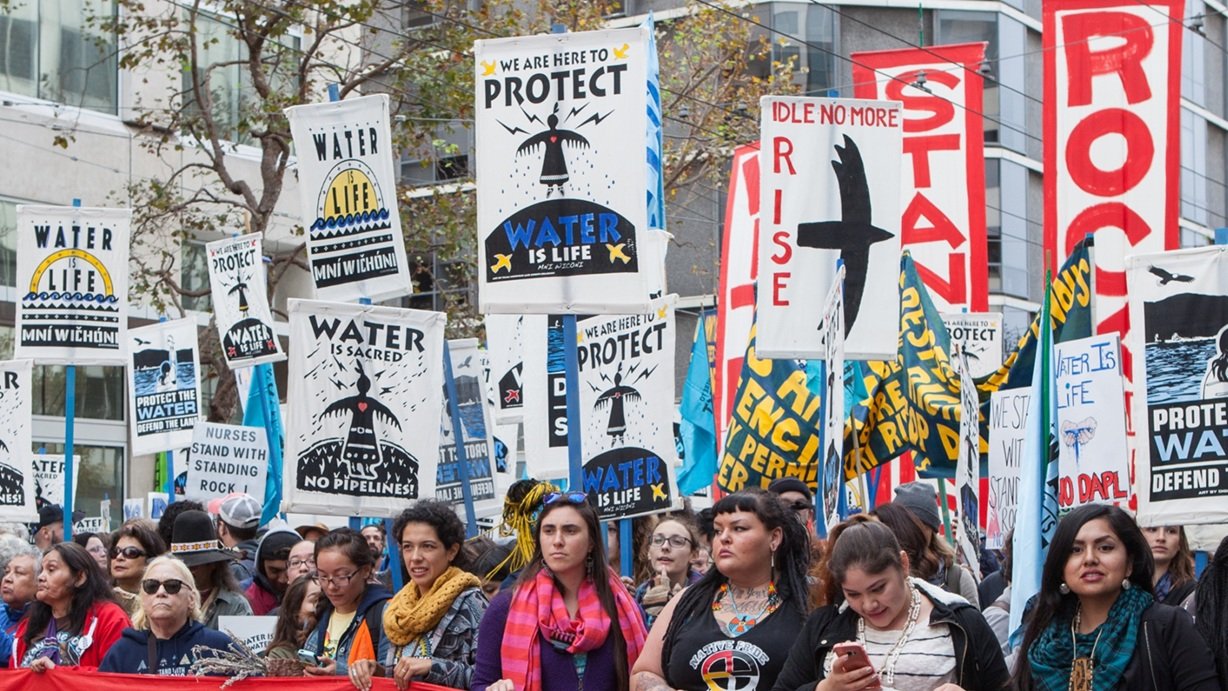
Climate policy advocates also learned their lesson and succeeded the second time. Following the failure of ACES, they adopted an emphasis on public participation. That led to some smaller wins such as blocking the Keystone XL oil pipeline, delaying the Dakota Access pipeline, and pushing a variety of investment funds to divest from fossil fuels. As an added benefit, some of the citizen participants went on to become civic leaders, including at least two future members of Congress: Alexandria Ocasio-Cortez and Deb Haaland. After the 2020 election of Joe Biden (who appointed Haaland as Secretary of the Interior), advocates successfully pushed through a major climate policy, the 2022 Inflation Reduction Act (IRA). Whereas the ACES cap-and-trade policy lacked substantial popular support, the IRA was more popular, featuring investments in clean energy and similar mitigation measures. So, democratic participation didn’t just achieve passage of major climate policy—it also changed the substance of the policy toward the preferences of ordinary citizens.
Unfortunately, much of the IRA was reversed by the 2025 “One Big Beautiful Bill Act” passed under President Trump. This reversal was due to a mix of fossil fuel industry corruption and limited support for the IRA across the electorate. Overcoming political corruption and expanding public support remain major challenges for climate policy.
Artificial Intelligence, 2023-Present
AI rose to national prominence following the November 2022 release of ChatGPT. Since then, and especially within the last year or so, there has been a flurry of policy activity.
Some of the recent AI policy has not involved substantial democratic participation. For example, last year, New York State passed the RAISE Act governing catastrophic AI risks. The effort to pass RAISE mainly involved advocacy by politicians, experts, and other insiders; there was little effort to engage the public. I would know—in my capacity as an AI risk expert based in New York, and separate from my role with GCRI, I was one of the insiders pushing for the passage of RAISE. This is another point of evidence showing that democratic participation isn’t always necessary for passing legislation.
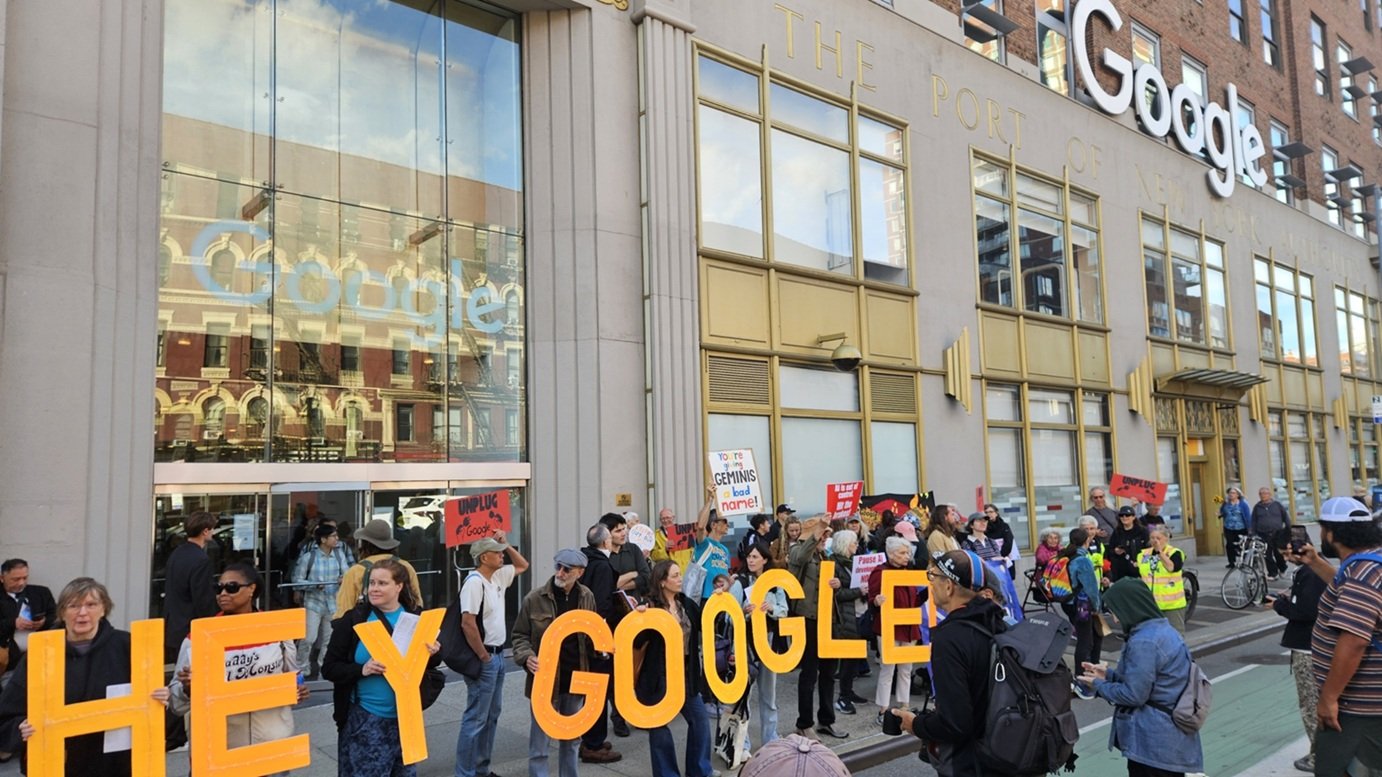
There has been some democratic participation, largely focused on opposition to data center construction. Data center opposition predates ChatGPT and concern about AI—the earliest I could find was in 2021—but it has exploded in the last year or so amid the AI boom and the accompanying surge in data center construction. One notable example is the June 2026 moratorium on new data centers in the city of Seattle, which passed following a flurry of citizen advocacy after news broke in April 2026 of plans for five large data centers to be built within the city. This example shows a clear link between democratic participation and policy outcomes, even on the rapid time scales of AI development.
Data center opposition is generally motivated by concerns other than catastrophic AI risk, but in my opinion, it is nonetheless relevant. It helps to reduce catastrophic AI risk by slowing down AI development, buying more time for safety measures and worsening AI company business models. It also provides an entry point for civic activism on AI, which could lead to activism on catastrophic AI risk, especially if groups concerned about catastrophic AI risk engage with data center opponents. Furthermore, it is of general relevance to global catastrophic risk because it is commonly motivated by concern about climate change; much of the data center opposition comes from environmental groups.
A Better Investment?
HCAN, the group that did public advocacy for the ACA, received $47 million over two years. This was enough to run a large public advocacy campaign, but it was small relative to the total ACA advocacy effort and relative to the ACES advertising campaign. This seems to be a running theme, in which democratic participation is underfunded relative to advertising and insider activity [4].
Shortchanging democratic participation may be a major strategic mistake. Democratic participation has several attractive attributes: it can be more effective at delivering major policy wins, it can help to orient policy toward the preferences of ordinary citizens, it can transform concerned citizens into civic leaders, and it strengthens democracy. Plus, money spent on advertising often lines the pockets of campaign consultants and media companies, whereas money spent on democratic participation goes more to ordinary citizens, many of whom could really use the income. And political advertisements are generally obnoxious in a way that civic groups are not.
There are important roles for insider policy advocacy, including to help identify policy advocacy opportunities, fine-tune policy details, and navigate the halls of government. Successful policy campaigns, including examples discussed above, often use an inside-outside strategy in which experts and other insiders partner with citizen groups. This does require insiders to yield some power to ordinary citizens, but perhaps that is exactly what we should do.
***
[1] My primary source for the nuclear peace section is David Cortright’s book Peace Works: The Citizen’s Role in Ending the Cold War. The 8,000 active peace groups statistic is from p.17.
[2] Cortright, Peace Works, p.208-210. In addition to the nuclear peace movement, a lot of credit goes to Mikhail Gorbachev. The Reagan administration’s hawkish “peace through strength” approach had mixed effects: it helped by weakening the Soviet economy, giving them economic reasons to seek peace, and by bolstering Western deterrence, but it hurt by weakening Soviet deterrence, emboldening Soviet hardliners, and taking seriously the idea of actually fighting nuclear war.
[3] My primary sources for the climate change section are Theda Skocpol’s report Naming the Problem: What It Will Take to Counter Extremism and Engage Americans in the Fight against Global Warming and the Sierra Club article A people’s history of the Inflation Reduction Act.
[4] Skocpol, Naming the Problem, p.41-43. More recently, the 2024 Harris presidential campaign may have similarly overinvested in advertising and underinvested in public participation.
Image credit: Pax Ahimsa Gethen, showing a protest of the Keystone XL and Dakota Access pipelines