Part of the GCRI Series on Democracy and Global Catastrophic Risk.
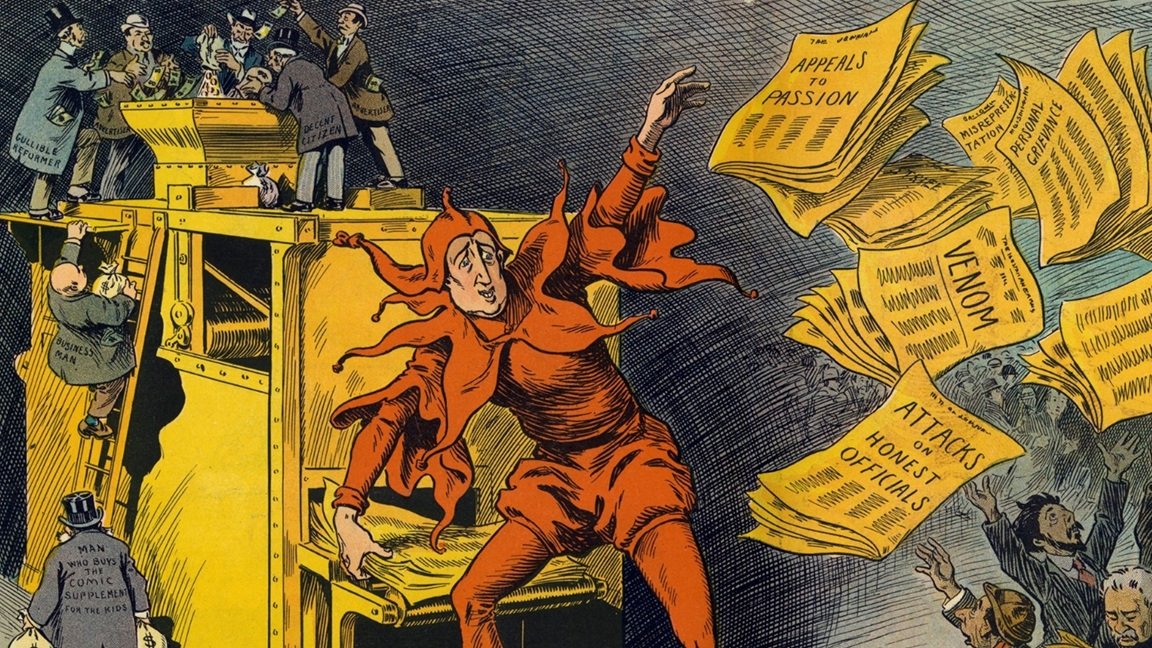
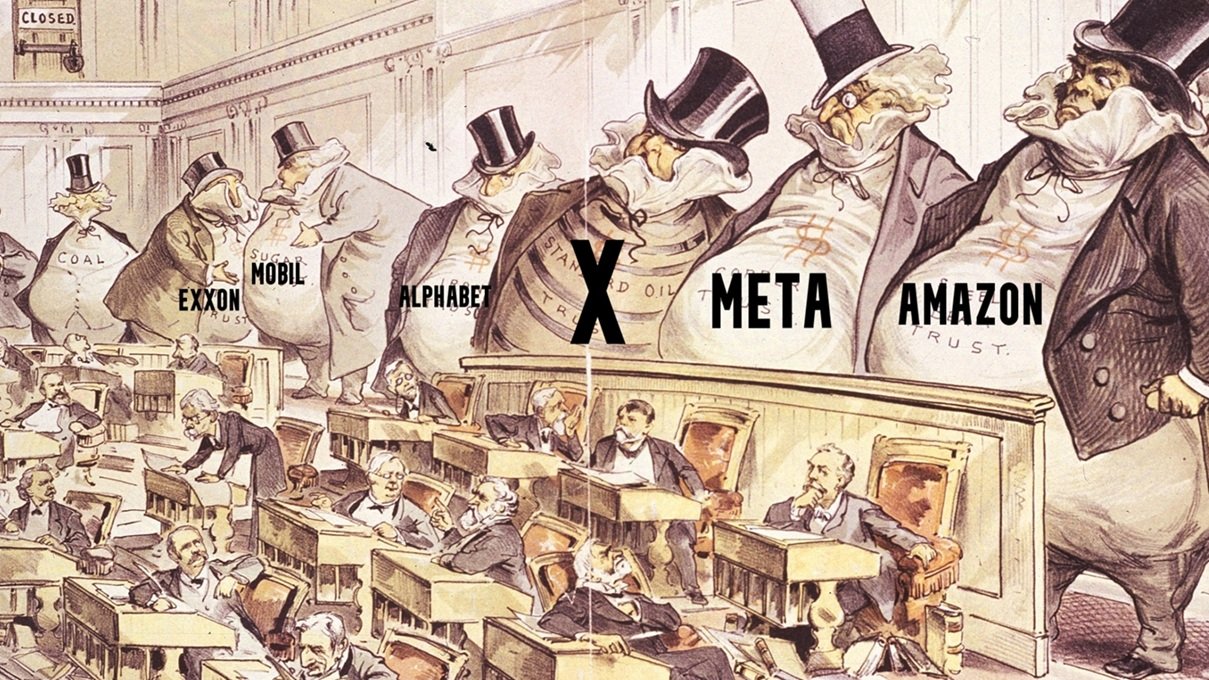
The cartoon above is a modern adaptation of an 1889 cartoon “The Bosses of the Senate”. It captures the main idea for this article: we want to advance policy to reduce global catastrophic risk, but we’re blocked by corrupt politicians who have sold out to private interests, especially fossil fuel companies for climate policy and tech companies for AI policy. This is a serious issue. We could do highly rigorous analysis and build broad public support for climate and AI policies, but it’s all for nothing if our political system is too corrupt to do anything about it.
My focus for this article is on the interconnected issues of campaign finance and lobbying [1]. Large corporations and the ultrarich, which for brevity I will call “Big Money”, may advance their political preferences by spending to influence electoral campaigns and by hiring lobbyists to make their case to government officials. My focus here is the US, but some of the concepts may also apply to other countries.
My big takeaway from studying the matter is that yes, the US does have a major problem with corruption from campaign finance and lobbying, but with limits. Big Money does use campaign donations and lobbying to get favorable policy from Washington, but it doesn’t always get everything it wants. US political corruption makes climate and AI policy more difficult, but it does not make it impossible. Various anti-corruption reforms would make it easier to pass good climate and AI policy while having broader benefits for American democracy and the American people, but there is still a lot of opportunity within the current system.
I do worry about Big Money, but I also worry about the seductive but mistaken idea that Big Money controls everything and the rest of us are just pawns in their game. It can discourage us from taking on Big Money, giving it even more power than it already has. It can also lead to us wasting scarce resources on the campaign consultants and lobbyists who benefit from the perception that Big Money dominates US politics. Fortunately, a close read of the evidence points to some promising ideas for how to address corruption and global catastrophic risk.
Some Historical Background
In three previous articles on US politics and global catastrophic risk, I described significant changes starting around the 1970s: a decline in democratic participation, a preference for decentralized government procedure, and the transition from the New Deal to the neoliberalism political order. This article adds to the picture.
A remarkable study of US inequality since 1700 found higher inequality around 1850-1930, roughly coinciding with the Gilded Age, the period which generated the original “The Bosses of the Senate” cartoon. This was followed by lower inequality around 1930-1970, corresponding to the New Deal political order, and then rising inequality since then, corresponding to the neoliberalism order. Neoliberal ideology favors low taxes and low corporate regulation, fueling inequality. Economic inequality can enable political corruption, making it easier for Big Money to dominate politics by buying off politicians and hiring lobbyists.
One motivation for neoliberalism was a distrust of government sparked by events such as the Vietnam War and the Watergate scandal. This also motivated desires for decentralized government procedure and for cleaner government. To pursue cleaner government, Congress increased its transparency, such as by making all Congressional committee meetings open to the public. It was hoped that this would make Congress less corrupted by lobbyists, as in the notion that “sunlight is the best disinfectant”. However, the reverse occurred: opening Congress up gave lobbyists more opportunity to engage and made it easier for them to make sure that members of Congress were doing what they wanted.
Finally, the 1970s also brought the 1976 Supreme Court case Buckley v. Valeo, which ruled that restrictions on campaign spending are unconstitutional violations of free speech. The power of Big Money really took off with the notorious 2010 Citizens United v. FEC Supreme Court case, which banned limits on campaign spending by corporations, unions, and other groups, and the subsequent 2010 Speechnow.org v. FEC Court of Appeals case, which banned limits on individual donations to independent political organizations (“Super PACs”).
In recent research, Charlton and Marissa Yingling document statusquotastrophe, in which US citizens describe status quo conditions as being catastrophic. They hypothesize that inequality and corruption may be significant contributors to this phenomenon. Perhaps it all traces back to around the 1970s, in particular some changes in American politics that may have seemed like a good idea at the time but have aged rather poorly.
Defining Corruption
Buckley upheld limits on individual campaign donations on grounds that large donations could invite corruption by making politicians beholden to large donors. It advanced a quid pro quo notion of corruption in which large donations could be made in return for political favors—in essence, bribery. Citizens United used a similar definition. Though narrow, this is consistent with the common definition of political corruption is the abuse of public office for private gain. In addition to bribery, it also includes embezzlement, nepotism, and insider trading, though these are less relevant to campaign finance.
The dictionary definition of corruption includes improper conduct such as bribery and embezzlement but also includes something more like a departure from what is pure or correct, as in corrupted files in a computer system or youth corrupted with impure ideas [2]. Similarly, in the philosophy of corruption, one definition is the intentional and avoidable undermining of purpose [3]. If the purpose of democracy is to empower citizens to govern themselves (government of the people, by the people, for the people), it may be corrupted by the combination of economic inequality and lax laws on campaign finance and lobbying, which can concentrate political power within a narrow elite.
Mixed Evidence
A 2014 study found, rather alarmingly, that how much ordinary citizens support a policy has almost zero effect on the chance of it becoming law, whereas the support of economic elites and industry groups has a very large effect. In my opinion, it is entirely reasonable to say that this constitutes a systematic corruption of American democracy. And if anything, the problem may be even worse now due to rising political spending by the ultrarich.
But let’s take a closer look.
Before Citizens United, about half of the US states had restrictions on corporate campaign spending. All of those were overturned at the same time, creating a “natural experiment”: if corporate spending has a large effect on policy, the trajectory of policy should look different in the half of states with overturned restrictions. One study did indeed find a difference, but only for policies that affect corporations’ welfare. Another study found no effect on environmental policy.
That does not mean Citizens United had no effect on environmental policy. It did lead to more campaign spending by the fossil fuel industry. One Democratic Senator observed a chilling affect in which his Republican colleagues personally worried about climate change but feared to speak out, largely due to the threat of industry campaign spending [4]. However, Republican climate advocates were already threatened by an ideological shift in Republican voters, prompting one of them to switch parties in 2009, before Citizens United. Another continued to support some (but not all) climate policies after 2010. And for their part, Democrats tried and failed to pass a climate policy in 2009 but they succeeded in 2022. These examples show that industry money was not the only force at play and that Big Money does not always get what it wants, though it can have a significant effect.
We can also look at what all that campaign money is buying. One study finds that, remarkably, campaign spending often has a very limited effect on voter behavior. Similarly, another study finds that the people who craft campaign messages often struggle to anticipate which messages will resonate with voters. An analysis of the 2020 campaigns found that vast amounts of money was wasted on advertisements that didn’t reach the correct people. In 2024, Kamala Harris lost despite her campaign and allied PACs outspending Donald Trump and his PACs by $2.9 billion to $1.8 billion. Post-mortem analysis of the Harris campaign found it rife with inefficient spending, with large sums going to well-connected campaign consultants and advertising firms; furthermore, its efforts to court wealthy Super PAC donors with friendly policy positions may have been counterproductive by turning off less affluent voters. All of this suggests that politicians may overestimate the electoral importance of Big Money. Standing up to Big Money is not necessarily a death sentence for politicians, and sometimes it may even be the opposite.
The situation with lobbying is also complicated. According to a recent review paper, for decades, political scientists struggled to find systematic evidence showing that lobbying influences policy, despite the widespread belief that it does. That only changed over the past decade, thanks to more advanced methods and data sets. This means that yes, lobbying does affect policy, but the effect may be subtle enough that it can be hard to detect from the outside.
All of this provides valuable perspective for the current state of affairs in AI policy. The AI industry is currently spending hundreds of millions of dollars on political campaigns and lobbying very aggressively for favorable policies. This has yielded some favorable policy, but with limits. For example, the NY RAISE Act on catastrophic AI risk was watered down, but it still passed into law. AI data centers are especially unpopular across the country, driving election results and policies, despite industry advocacy. In US politics, money has an effect, but it can’t buy everything.
What To Do
It would help to reduce the role of Big Money in US politics. This would be of benefit for advancing climate and AI policy, for advancing other policies to benefit the American people, and for reducing the systematic corruption of our democracy. To reduce the role of Big Money, many proposals have been advanced [5]. This includes tax policy and predistribution to reduce economic inequality, challenging Citizens United and Speechnow, banning profiteering, improving public funding for elections, creating publicly funded vouchers for citizens to donate to campaigns, strengthening rules against the “revolving door” between government officials lobbying firms, rethinking the constitutionality of modern lobbying (a fascinating and shockingly understudied topic), increasing in-house government policy analysis capacity so policy makers are less reliant on outside lobbyists for understanding the issues (bring back the Office of Technology Assessment!), systematically encouraging voting by less affluent citizens (and environmentalists), and supporting grassroots political organizing.
Meanwhile, climate and AI policy advocacy should take some lessons to heart. First, despite well-financed pushback from the fossil fuel and AI industries, climate and AI policy advocacy can succeed. Second, the path to success may not depend primarily on raising massive amounts of money to spend on lobbyists or advertising campaigns. Indeed, a big reason why Democrats passed a climate policy in 2022 but not 2009 is because climate advocates shifted their efforts from insider advocacy to grassroots organizing; they also concurrently shifted their focus from a neoliberal policy with limited popular appeal (cap-and-trade) to something more beneficial to the less affluent environment justice community.
This climate policy story is consistent with my prior article on democratic participation, finding that without mass public participation, it would be harder to pass major policies to address global catastrophic risk. This also just seems like how democracy is supposed to work: of the people, by the people, for the people, instead of being of, by, and for Big Money with “the people” passively on the sidelines.
***
[1] Major topics not covered here include Big Money spending on nonprofits (e.g. think tanks sowing doubt about climate change) and media (e.g. the purchase and ideological alteration of Twitter/X and the Washington Post). Also not covered here is corruption in policy implementation, such as bribery in Amazon deforestation and California solar power. Finally, my focus here is on the general issue of political corruption and not the extreme corruption of the current Trump administration.
[2] That last link is to Corrupt the Youth, “an outreach program that brings philosophy to high school students from backgrounds that have been historically excluded”. For the record, I think that sounds fantastic, and I fully support this sort of “corruption”.
[3] This definition is based on the numbered list in Section 2.2 of the Stanford Encyclopedia of Philosophy article on corruption.
[4] See Chapter 11 of Whitehouse’s book Captured, written with Melanie Wachtell Stinnett. See also the Common Cause report Silencing Science.
[5] See for example Part 3 of Democracy in America?.
Image credit: Infrogmation, adapted from The Bosses of the Senate by Joseph Keppler, 1889.