Part of the GCRI Series on Democracy and Global Catastrophic Risk.
“Freedom of the press belongs to those who own one.” [1]
For democracy to succeed, citizens need a strong news media to provide them with quality information about the issues they face. In this article, I’d like to discuss some fundamental characteristics of US news media, especially related to its predominantly commercial orientation. These characteristics substantially affect US media coverage of global catastrophic risk and its coverage of fundamental governance norms of direct relevance to addressing global catastrophic risk. Much of the discussion is also relevant to other countries, though the US does have a somewhat distinctive media ecosystem.
Some History
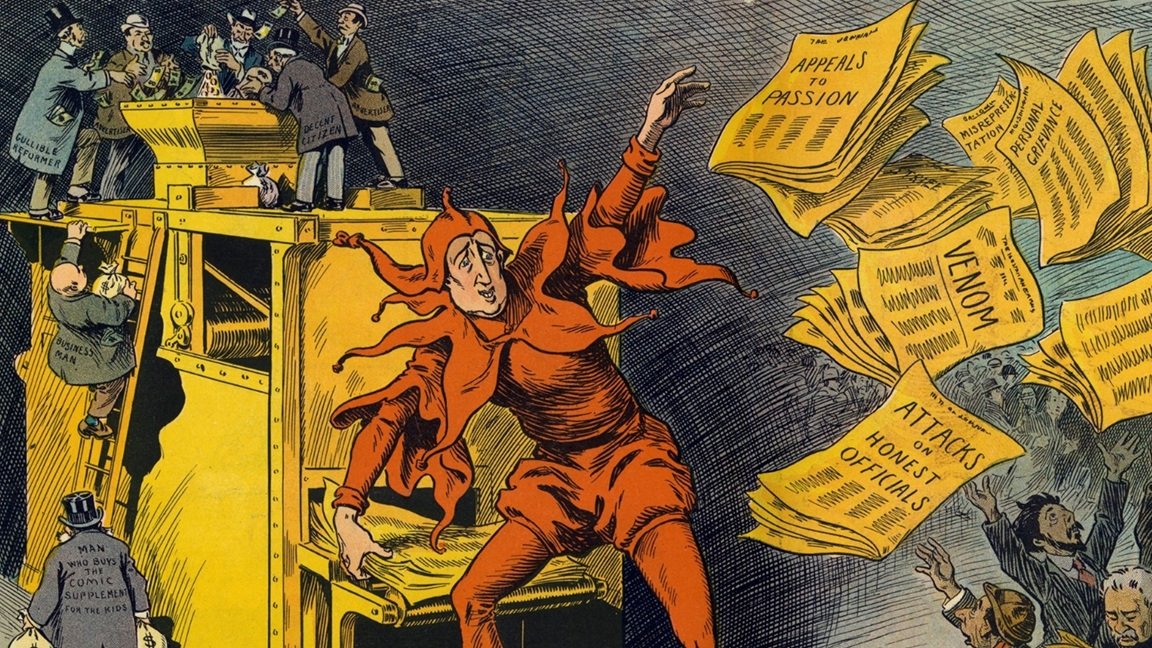
The history of the US news media is full of compelling stories: the newspaper subsidies in the Postal Service Act of 1792, the mid-1800s development of electric telegraphy giving rise to the Associated Press, the ridiculous excesses of late-1800s/early-1900s yellow journalism as satirized in the image above (e.g., dismembering a cadaver hand to stage a fake news story), and so much more [2].
Perhaps the most important point is that the US media ecosystem has evolved to operate on an overwhelmingly commercial, for-profit basis. The original US newspapers were mostly politically partisan, generally sponsored by politicians and political parties; the First Amendment’s freedom of the press clause served to stop government crackdowns on dissident newspapers. The early-mid 1800s also had newspapers for civic associations, such as for the abolition of slavery. By the end of the 1800s, newspapers were predominantly commercial. Population growth and new technologies such as the steam-powered printing press brought economies of scale for a lucrative advertising market.
In the early 1900s, the US debated allocating some or all of its radio bandwidth to public broadcasting. At the time, other countries were setting up public broadcasting, including Australia (ABC, founded 1932), Britain (BBC, 1927), and Canada (CBC, 1932). President Franklin D. Roosevelt initiated a 1938 symposium in the St. Louis Post-Dispatch on whether a free press suitable for democracy could succeed in a for-profit media ecosystem. However, the corporate media won the day. The US eventually established the Corporation for Public Broadcasting in 1967, but it was funded at a much lower rate than peer countries until the Rescissions Act of 2025 eliminated funding entirely.
Backlash against yellow journalism and debate over public media were part of a broader critique of commercial news media. This pushed much of the early 1900s commercial media industry to adopt professional norms such as objectivity and neutrality, though it still exerted significant influence such as by choosing which stories to cover. The economies of scale had brought a less competitive media industry; neutrality helped a smaller number of mass media outlets reach a larger population. Dissident publications retained First Amendment protections but struggled economically.
Since around the 1960s, US media corporations have pursued aggressive tactics to boost profits. Many newspapers slashed delivery service to rural and working class areas and reduced coverage of labor politics to focus on the growing population of affluent, upscale, college-educated readers who attracted higher rates from advertisers. Media outlets sometimes biased coverage to favor advertisers. Local news companies have consolidated via extensive mergers and acquisitions, resulting in a small number of national conglomerates controlling a large portion of media across the country, such as Sinclair, Nexstar, iHeartMedia, Cumulus, and Gannett/USA Today. The conglomerates have slashed local reporting and replaced it with nationally syndicated content, sometimes even dictating content for local stations. In-depth reporting has been replaced with cheaper formats such as shallow clickbait and talking-head commentary. Hedge funds and private equity firms (e.g., Alden Global Capital) have been active in acquiring and extracting profits from legacy media companies: vulture capitalism. These various tactics are arguably bad for democracy; they also fit with post-1960s trends covered in other GCRI articles, especially the decline of democratic participation and the rise of the neoliberalism political order.
Also starting around the 1960s, conservative activists have pursued extensive media initiatives. These include The 700 Club, talk radio such as Rush Limbaugh, television channels such as Fox News and One America, conglomerates such as Sinclair and Nexstar, websites such as Breitbart and The Daily Caller, and social media platforms such as Twitter/X. The conservative media has generally favored an advertiser-friendly pro-corporate, anti-regulatory policy agenda. As documented by Bekler et al. (2018), these media outlets have often employed sensationalism and falsehoods and arguably classify as propaganda, echoing the yellow journalism of the past, whereas media on the political left and center have maintained professional standards of truthfulness. Despite this, the conservative media frequently criticizes the other media outlets, which it often refers to as “liberal media”. For its part, the US political left has invested much less in media initiatives, instead relying more heavily on more politically neutral outlets such as NBC and The New York Times.
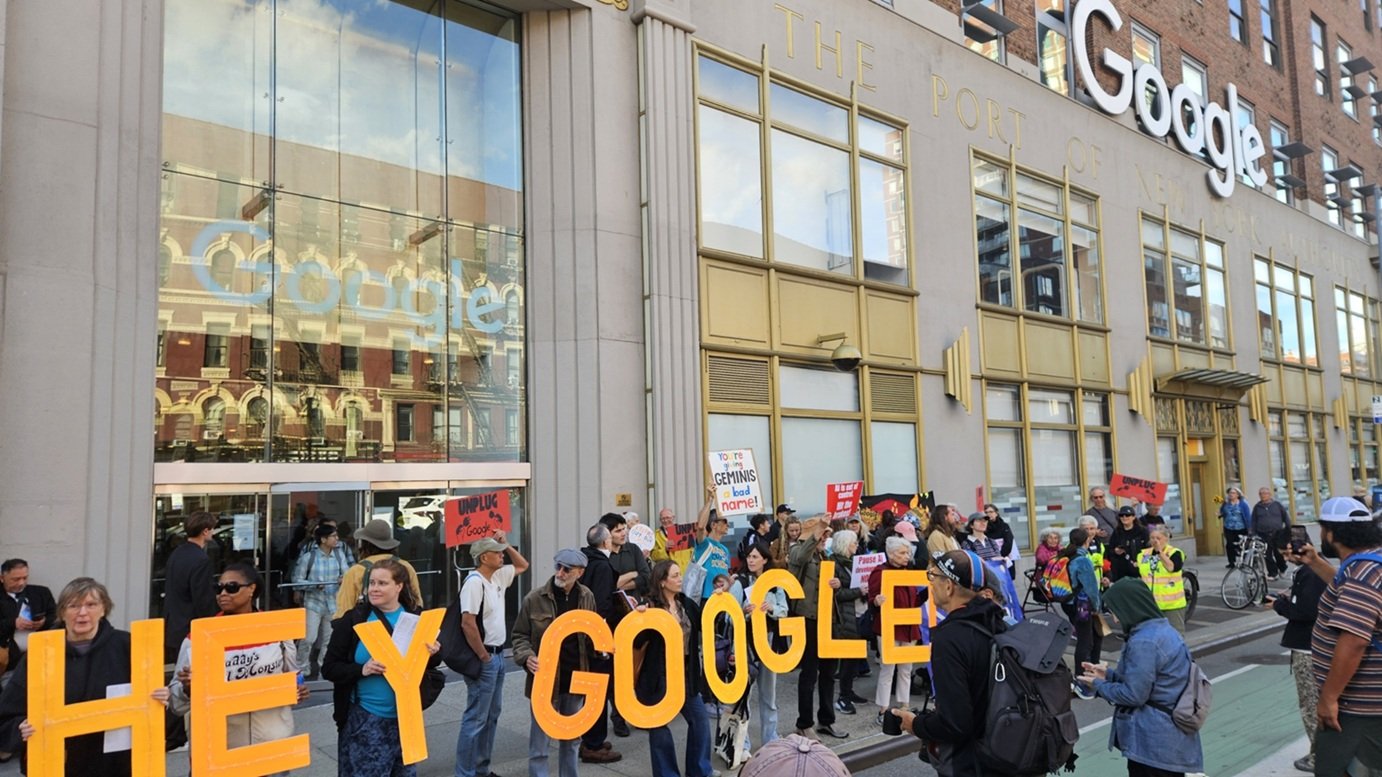
Since the early 2000s, the internet has decimated the business models of professional media companies. Advertising revenue increasingly goes to internet companies, especially Craigslist (for classified ads), Facebook, and Google. Recently, tech companies have further cut into news media revenue by reducing links to external websites on social media platforms and search engines, including via generative AI. Nationwide, the number of working journalists has declined substantially and many media outlets have closed. Local news, already on the decline due to corporate cost-cutting, has been hit especially hard. The situation is exacerbated by the US’s lack of publicly funded media. Nonprofit news has grown to fill some of the void, but at a smaller scale.
Implications for Global Catastrophic Risk
The high point for media coverage of global catastrophic risk may have come during the 1980s nuclear peace movement, which advocated for nuclear arms control and less hostile relations between the Soviet Union and the West. The movement drew extensive media coverage, much of it positive. In 1983, the US television network ABC broadcast The Day After, a fictional depiction of the brutal reality of life after nuclear attack. Despite objections from the Reagan administration, it became one of the largest television events in history, watched by an estimated 39 million households and over 100 million people. The nuclear peace movement helped build an audience and ABC committed to delivering for it. Other media outlets across the country also covered the movement at great length [3]. This shows that it is possible to achieve significant coverage of global catastrophic risk within a commercial news media ecosystem.
Since then, coverage has been more mixed. A study of 1988-2002 climate change coverage in The New York Times, The Washington Post, the Los Angeles Times, and The Wall Street Journal found a tendency to give disproportionate coverage to climate skeptics due to the professional norms of neutrality and balance: the newspapers sought to be neutral regarding whether climate change is actually happening and balanced with respect to both sides of the debate, despite the overwhelming scientific evidence on climate change. Fortunately, a recent follow-up study finds that the situation has improved. Other criticisms include biasing coverage in favor of polluting advertisers, uncritical coverage of self-serving statements by AI corporate executives, and favoring militant nationalist perspectives over peace and international cooperation, including for nuclear war.
The conservative media has been especially problematic. Studies have found it to be less supportive of climate science and policy and COVID-19 health precautions. Narratives of “liberal media” have left conservatives so distrusting that public health officials struggled to reach them through local news during the height of the pandemic; they also died at higher rates. Most recently, some conservative media (but not all) has been found to downplay concerns about AI risk, describing it as a hoax similar to climate change and COVID-19. Finally, conservative media’s general opposition to government regulation makes it harder to advance a range of constructive policies to address global catastrophic risk.
The decline of local news is also a problem for addressing global catastrophic risk. Local news can cover local dimensions of global catastrophic risks, such as infectious disease spread, climate impacts, urban design to reduce greenhouse gas emissions, and AI data centers. It can cover local elected officials’ stances across the range of global catastrophic risk policies. And it can cover local civic initiatives in which citizens get involved in addressing global catastrophic risk.
Media Reform
First of all, the conservative media needs a radical overhaul in, among other things, its treatment of risks and risk governance. Its propensity for falsehoods, downplaying of risks, and anti-regulatory stance are fundamentally at odds with responsible risk governance. For their part, the politically neutral outlets like NBC and The New York Times need to be wary of taking their neutrality too far. It is dangerous to be neutral on global catastrophic risk. As discussed above, studies of their coverage of climate change show them making progress; they should ensure that this trend continues. Finally, the political left should invest more in media initiatives to bring balance to the US media ecosystem [4]. In doing this, they should maintain their existing commitment to professionalism and intellectual rigor.
Regarding the decline of news media revenue, there is a simple solution: government funding. This can come in several forms, including public media, as in a revitalized Corporation for Public Broadcasting; government subsidies for media distribution, as in the Postal Service Act of 1792; government grants to private media outlets, as in the New Jersey Civic Information Consortium and analogous to research grantmaking such as in the National Science Foundation; vouchers, in which citizens receive an annual amount of funding that they can direct to the media outlet of their choice, analogous to the Seattle Democracy Voucher Program for campaign finance; and governments paying private media outlets to deliver public service announcements, as pioneered by El Tímpano in California. Each form has strengthens and weaknesses, for example regarding economies of scale, administrative complexity, and independence from government interference. I think we should do all of them, in addition to more nonprofit media.
There is a rigorous theoretical case for public funding of news media. In economics terms, information is a public good: something for which one person using it does not preclude other people from also using it. If I eat an apple, you can’t eat the same apple, but if I use a weather report, you still can too. Public goods benefit from public funding so that everyone can enjoy them. This is why academic research is commonly funded by governments and published for anyone to build on. The same logic applies to news media. Historically, news media generated revenue as the primary means of delivering advertising, but with the internet, that’s not the case anymore, strengthening the importance of public funding.
Other media reforms would also help. Restrictions on media ownership could prevent conglomerates and billionaires from gaining excessive control over civic information. California’s recent settlement enabling the Paramount-Warner Brothers merger is deeply unfortunate. More creatively, the US could consider higher standards for media content as found in some peer countries. For example, Canada has considered banning Fox News due to alleged violations of its hate speech law; the German NetzDG law restricts hate speech and misinformation. However, such policies may violate the First Amendment of the US Constitution and may likewise only be feasible via constitutional amendment, which is politically difficult.
We as concerned citizens can advance media reform through organizations like FAIR, Free Press, Institute for Nonprofit News, Media and Democracy Project, and Rebuild Local News. Please note, I may not agree with everything these organizations are doing, but I do think they’re working broadly in the right direction. Meanwhile, we can help by supporting quality news media, such as by clicking links to their articles [5], frequenting their websites, and purchasing a subscription and/or donating to nonprofit news if we can. These simple gestures don’t solve the entire problem, but they do help.
These various suggestions could improve the US news media ecosystem. In my opinion, they would also substantially benefit the reduction of global catastrophic risk by improving citizen understanding of the risks and fostering better risk governance.
***
[1] The quote appears in C. Edwin Baker’s article Media concentration: Giving up on democracy, attributing the quote to journalist and press critic A.J. Liebling in his 1947 book The Wayward Pressman.
[2] As a starting point, I can recommend Victor Pickard, Democracy without Journalism?. I have also enjoyed reading Christopher Martin, No Longer Newsworthy; Martha Minow, Saving the News; and Neil Postman, Amusing Ourselves to Death. Other notable books include Gerald Baldasty, The Commercialization of News in the Nineteenth Century; Robert McChesney, Rich Media, Poor Democracy; and John Nerone, The Media and Public Life: A History.
[3] See chapter 5 of David Cortright’s book Peace Works: The Citizen’s Role in Ending the Cold War. Further discussion of the 1980s nuclear peace movement is available in my articles on evidence on democratic participation and political organizing.
[4] My own political ideology is neither left nor right. I call it democratic welfarism, as outlined in my article on political orders.
[5] To avoid the Google search AI overview, I search with the DuckDuckGo search engine using its NoAI setting and Startpage, a no-AI variation of Google.
Image credit: L.M. Glackens, The Yellow Press