Part of the GCRI Series on Democracy and Global Catastrophic Risk.
It is possible to achieve major policy wins, including on global c1atastrophic risk, via advocacy by large groups of ordinary citizens. Indeed, in the US, it has a substantial track record of success. Policy advocacy by the public also strengthens democracy and orients policy toward the values and interests of ordinary citizens. In this article, I will address the more practical question of how to go about achieving large-scale public advocacy. The answer lies in the domain of political organizing, in which groups of citizens come together to advance political goals. In academic terms, this is political sociology, the study of how people interact to do politics [1].
There is a perspective in which political organizing is fundamental to democracy. Democracy, at its core, is a system of government in which political power is held by the broader population. Some sort of organizing is needed to translate people’s views into a functioning government. Even if democracy only has people participate by voting in elections, organizing is still needed for conducting electoral campaigns. However, US democracy was designed to be more participatory—hence First Amendment protections on speech, the press, peaceable assembly, and petitioning the government. This more participatory form of democracy requires more organizing. So how do we do it?
This article focuses on the US, but some of it may also be relevant to other countries.
An Example: The 1980s Nuclear Freeze Campaign
As I discussed here, the 1980s nuclear peace movement is an important example of successful democratic participation. It helped advance nuclear arms control and improve relations between the Soviet Union and the West, which culminated with the end of the Cold War. The movement was multifaceted, addressing several aspects of nuclear weapons and East-West relations. One component of it was the nuclear freeze campaign. The campaign makes for a good case study in political organizing.
The nuclear freeze campaign’s premise was that “The United States and the Soviet Union… should adopt a mutual freeze on the testing, production, and deployment of nuclear weapons.” This language, written by graduate student and former school teacher Randall Caroline Forsberg, was intended to be clear and compelling to the wider public, in contrast with the more technical and inaccessible policy concepts that are commonly found in expert nuclear weapons policy conversations [2].
It worked. Peace activists collected signatures to get a nuclear freeze referendum on the ballot in western Massachusetts in 1980. After months of public education and outreach, it won with 59% of the vote. This sparked national interest in the freeze.
Activists from across the country decided to launch a new organization, the Nuclear Weapons Freeze Campaign. However, it would not be the typical centralized, top-down nonprofit advocacy organization. Instead, it would be a loose coalition of grassroots groups from across the country. To emphasize this, they even called their main office a clearinghouse instead of a headquarters, located it in St. Louis instead of Washington, DC, and gave their lead the title National Coordinator instead of Executive Director. This served not to dictate terms from on high but to support local groups taking their own initiatives, many of which had already begun even before the national organization was started.
Support for the freeze spread. Religious communities and trade unions signed on. Membership soared in other anti-nuclear organizations such as SANE and Physicians for Social Responsibility. Advocates organized to put freeze referenda on the ballot in nine states and many cities across the country. In total, 10.8 million Americans voted on the freeze with about 60% voting in favor. This propelled it into a national issue. Freeze advocates across the country pressured their members of Congress. In 1983, the US House of Representatives passed H.J.Res.13, “A joint resolution calling for a mutual and verifiable freeze on and reductions in nuclear weapons”.
The freeze resolution was in some respects water-down, and it died in the Senate. Nonetheless, it was an important success for the broader nuclear peace movement. This is typical: political movements often succeed not with one singular win, but by building durable coalitions to sustain pressure across multiple fronts. Political organizing needs to be structured accordingly.
Organizing and Mobilizing
The structure of the nuclear freeze campaign fits a broader pattern. Public advocacy initiatives often have success when they follow a decentralized structure that empowers local groups and their members to take their own initiatives. Other notable examples include Mothers Against Drunk Driving, the Tea Party, and the largest grassroots campaign in US political history, the 2008 Obama campaign. In contrast, more centralized, top-down campaigns often fail to generate enough public pressure; grassroots initiatives that do not systematically empower people often fail to scale up and maintain pressure over time.
Political sociology research finds that success often comes from having the right mix of organizing and mobilizing. Mobilizing involves getting a large number of citizens to take some action, such as signing a petition or showing up at a protest. In contrast, organizing involves building relations between citizens to create the capacity for civic activity. Organizing includes the behind-the-scenes work that makes a protest possible along with other sustained activity in support of some political goal. For example, the 1980 nuclear freeze ballot campaign in western Massachusetts culminated with a mobilization of voters in support of the freeze, but leading up to that moment, freeze activists organized to conduct public education and outreach.
Mobilizing is essential, but recent research finds a common pitfall in which groups overemphasize it at the expense of organizing. Mobilizers typically seek to make public participation easy to maximize the number of participants, such as at a protest. This has become especially seductive since modern internet tools have made mobilizing at scale much easier—now, one can simply plan an event and let word about it spread online. A large event can serve to register public opinion, but policy-making processes involve much more: contacting elected officials, building coalitions, negotiating with policy-makers and other stakeholders on the substance of policies, etc.
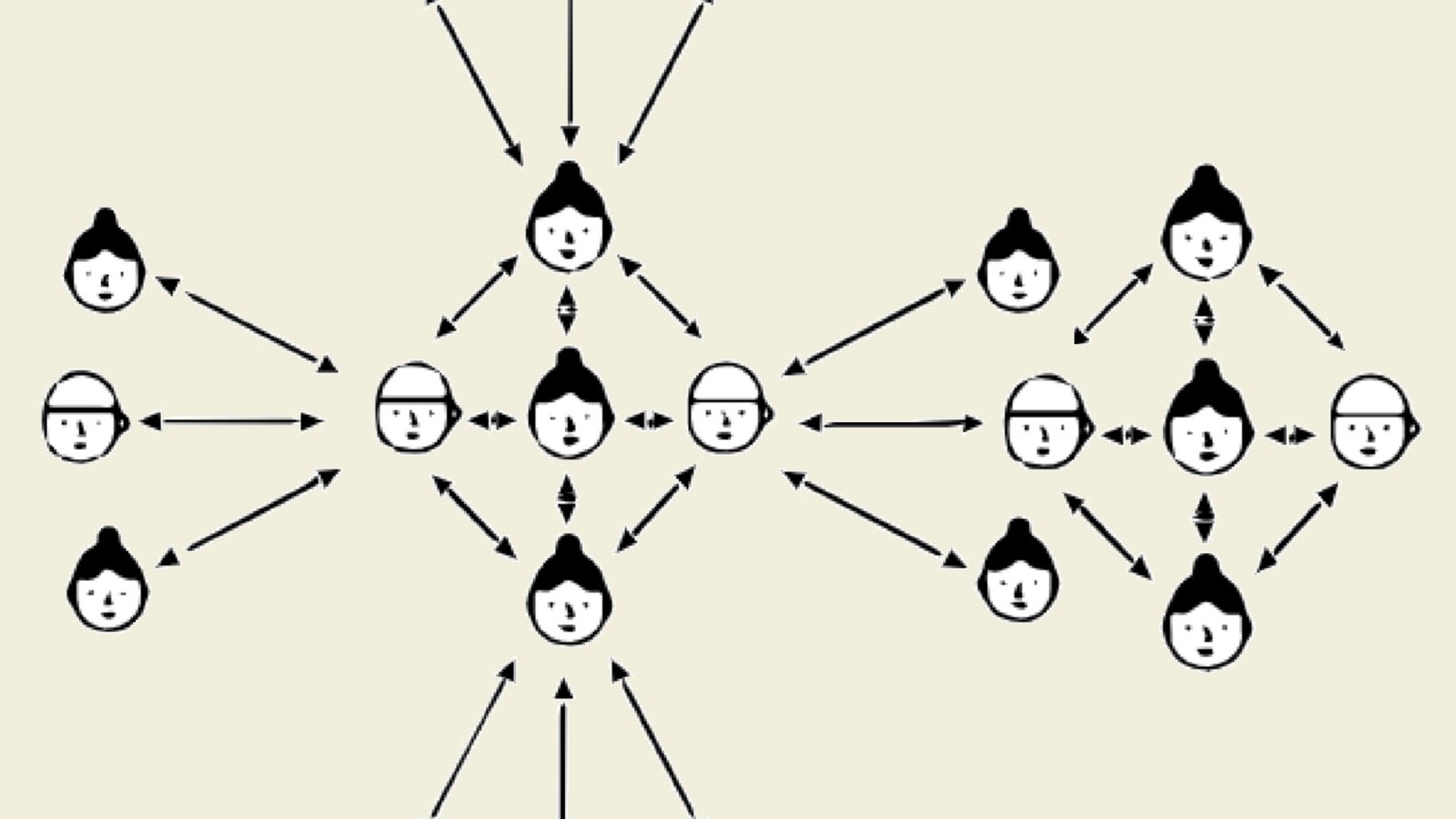
In contrast, organizers are generally more demanding of the people they recruit. They’re not just looking for people to show up at some event—they’re looking for people who can serve in a leadership role. They will likewise invest in motivating and training and mentoring until the new recruits are able to lead. This is a transformative process, transforming citizens into civic leaders. These new leaders can then recruit and train new leaders, who will then recruit and train new leaders, and so on. This is how a citizen group can build the capacity for extensive, sophisticated policy advocacy at scale. A group could even build out a national network by successively recruiting people in different regions, states, counties, towns/cities, and neighborhoods, by organizing into committees for different policy issues, activity types (e.g., recruitment and event planning), etc., and by building coalitions with other organized groups. The result is a functional network of citizens, an interconnected org chart of activists, unlike the undifferentiated masses at a protest.
One clear example of this can be found on the website of Working Families Power. The organization states that it “engages in program incubation, coalition building, organizing, leadership development, advocacy, and public education on policies”. They started in New York and have since spread around the country. They describe their leadership development programs as “developing infrastructure for the long term, so that the scale and scope of our victories is ever-widening, the capacity of our movements ever-growing, and the depth of grassroots leadership ever-sharpening”. This really captures the concept of political organizing as discussed in the research literature [3].
The sort of formal training programs run by Working Families Power can be very helpful, though they aren’t always necessary. For comparison, a lot of the local nuclear freeze groups were initiated independently by local activists. People seeking to start new chapters of the group Turning Point USA are often told to read a book on the Obama campaign and then mostly left to figure it out for themselves, sink or swim; this is ironic because Turning Point and Obama fall on opposite sides of the political spectrum, but the principles of political organizing are more universal.
Lone Wolves
In addition to mobilizers and organizers, research identifies a third type of activist, the lone wolf. As the name suggests, lone wolves mostly operate on their own, without seeking to recruit other citizens. Instead, they will try to do it all themselves, especially by engaging in deep studies of specific policy issues, writing detailed reports, and engaging directly with policy-makers. They may even report that they are too busy to recruit other people, even though they could really use more people given the breadth of work needed to address the policy issues.
This one stings. From my perspective as a professional researcher, the description of lone wolves really hits home. So much of my own work has been spent either in isolation or in small groups, writing detailed reports and research papers and articles like the one you’re reading now. Perhaps I have been weakening my own policy impact by doing this instead of in recruitment and training and so on. I would expect that other researchers may feel similar.
To be clear, there are still important roles for research within an ecosystem of civic activism, such as to study issues and develop policy concepts that organizers may be able to draw on. Nonetheless, I do think this is something that researchers should reflect on and consider as a basis for changing the orientation of our work.
***
[1] Some notable political sociologists studying organizing include Hahrie Han, Elizabeth McKenna, Marshall Ganz, and Ziad Munson.
[2] The quote is from Forsberg, “Call to Halt the Arms Race”, quoted in pages 11-12 of David Cortright, Peace Works: The Citizen’s Role in Ending the Cold War.
[3] Working Families Power pursues “policies that advance economic fairness, racial justice, gender equity, climate sustainability, and a democracy which is responsive to the needs of the many—not the wealthy and powerful few”. In addition to climate policy, they were also active in COVID-19 response. This makes them helpful on global catastrophic risk, consistent with GCRI’s longstanding approach to solutions & strategy that emphasizes addressing global catastrophic risk alongside other issues. See also the GCRI Statement on Racism. Note that this is not an endorsement of WFP: they seem like a good organization, but I don’t know anything about them beyond what’s on their website.
Image credit: Marshall Ganz, p.26 of Organizing: People, Power, Change