Part of the GCRI Series on Democracy and Global Catastrophic Risk.
AI initiatives based in democracies often position themselves as fighting on the side of democracy in a global contest between democracy and authoritarianism. However, there can be a tension between this position and democracy itself when the people of a democracy do not want the AI. This short paper proposes that an initiative that aspires to be democratic should disband itself if it is unwanted by the people. It follows that there cannot be an unwanted democratic AI initiative. This is the paradox of unwanted democratic AI.
The paper develops two different versions of the paradox: one for AI systems and one for AI projects. An AI system is a computational entity, such as a large language model or an AI agent. An AI project is a human organization dedicated to developing and building AI systems, such as OpenAI or Anthropic.
AI systems. In AI ethics, a common idea is for AI systems to follow some measure of the aggregate values of humanity. This idea can be found in concepts such as value alignment, human compatibility, and social choice ethics as discussed in prior GCRI papers (1, 2). However, if the aggregate values of humanity prefer that an AI system doesn’t exist, then what should it do? Arguably, in this situation, the AI system should self-destruct.
AI projects. In contemporary AI projects based in democracies, it is common for their leadership to express democratic values as a core justification for the project’s existence. However, if the public does not support the project, and instead prefers that the project doesn’t exist, then what should it do? Arguably, the project should disband itself.
As the paper discusses, the paradox for AI projects resembles the current state of affairs in the US. American public opinion on AI is increasingly negative. There is growing civic advocacy against some aspects of AI projects, especially data centers. It is not an unambiguous case of unwanted democratic AI, but there are clear signs pointing in that direction.
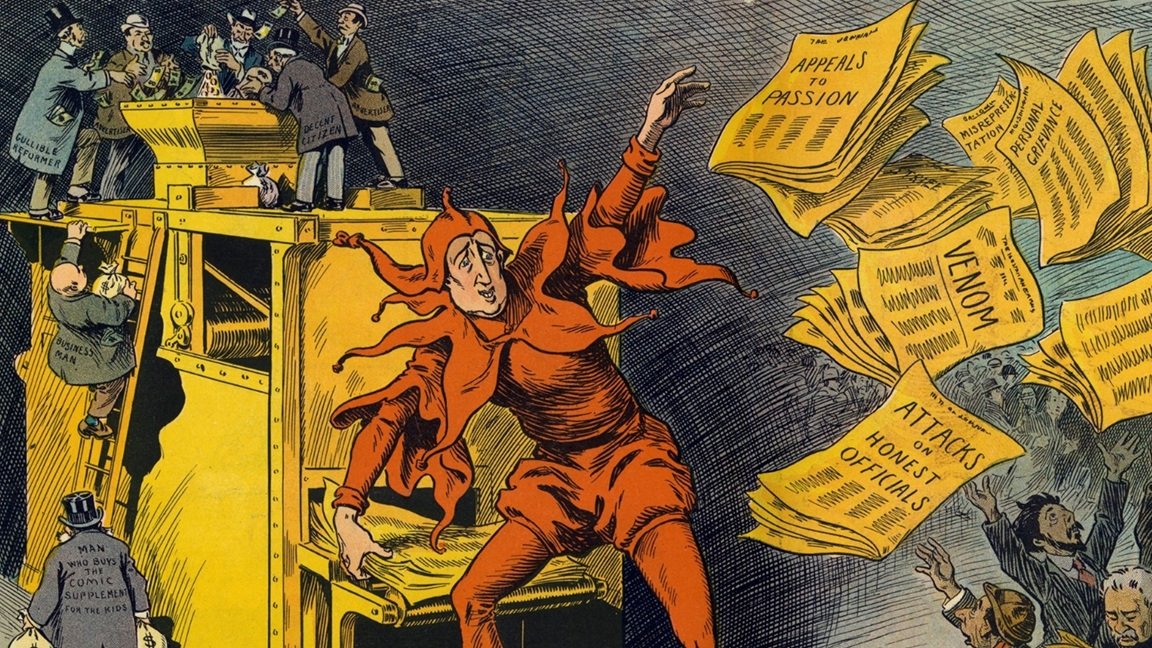
The paradox is especially salient for certain types of AI projects. This includes projects that pose substantial catastrophic risks: it can be expected that the public does not want AI that kills everyone. It also includes forms of AI that diminish democracy, such as AI that spreads misinformation, reduces revenues for news media companies, and concentrates wealth and power in a narrow elite. In contrast, some applications of AI are uncontroversial and have broad public support, for example AI to improve weather forecasting or the detection of financial crimes.
The paper addresses the international dimension through discussion of a recent essay Eat your AI slop or China wins. As the title suggests, the essay paints a bleak picture for democracy, a dilemma with no good options: either accept a substantially diminished democracy under American AI or face subjugation by authoritarianism. The paper argues that this perspective neglects the third option: diplomacy. Diplomacy does not guarantee a positive outcome, but it may be the only option for achieving strongly democratic values and is likewise important to pursue. See also the GCRI Symposium on World Peace.
The paper calls for AI projects to commit to a high standard of support for democracy, especially the projects that pursue the extreme forms of AI that pose catastrophic risks and other major challenges to democracy. Strong support for democracy is especially important to counteract the projects large conflict of interest. The paper also citizens to organize into advocacy coalitions that jointly support responsible AI corporate governance and democratic reform, especially regarding political corruption. See also GCRI articles on political organizing and political corruption.
Academic citation:
Baum, Seth D., 2026. The paradox of unwanted democratic AI. AI & Society, forthcoming, DOI 10.1007/s00146-026-03386-y.
Download PDF Preprint • View in AI & Society • View in ReadCube
Image credit: G. Edward Johnson