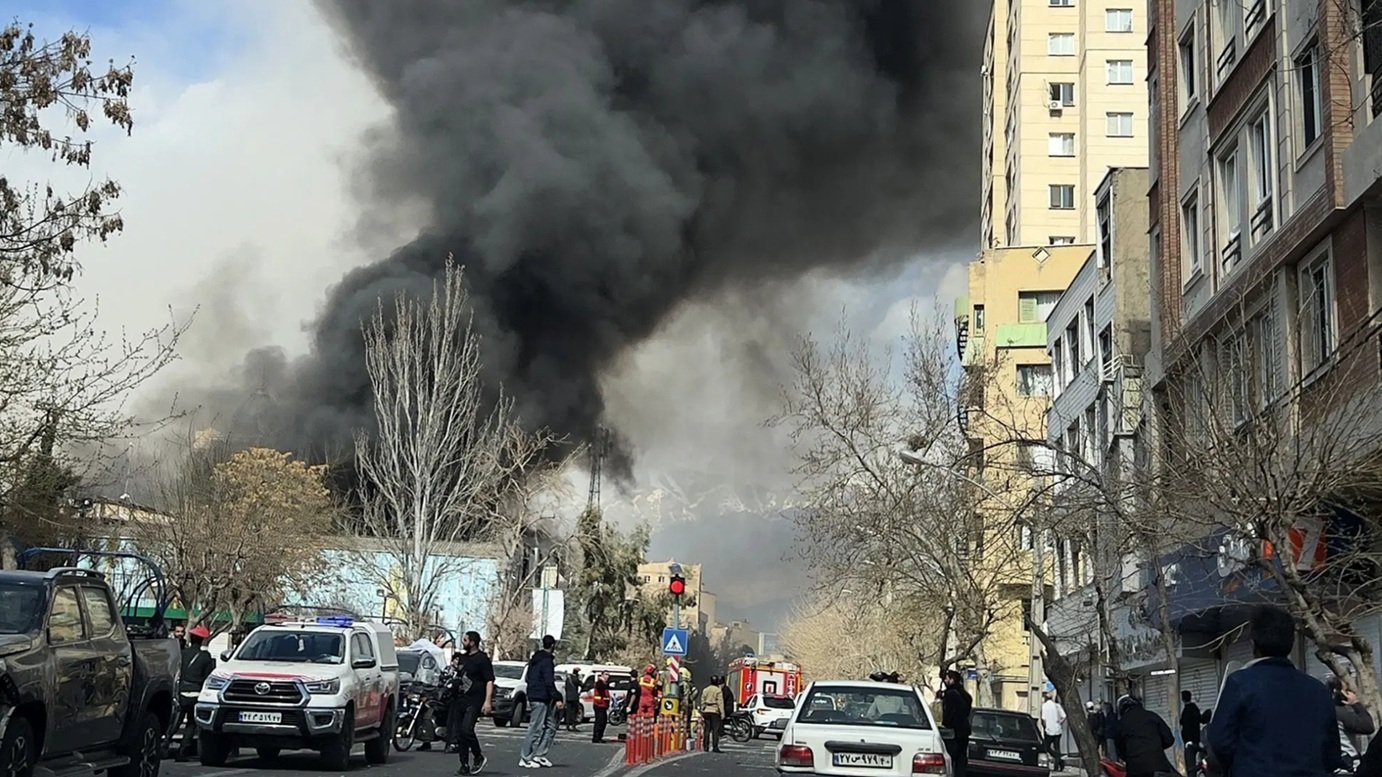
On 28 February 2026, Israel and the United States launched military attacks against Iran. Iran retaliated. Despite talk of it being a short conflict, at the time of this writing, the fighting continues. Meanwhile, there are already several important implications for global catastrophic risk.
Before getting into the implications, I would like to express my heartfelt sympathy for everyone harmed by this war, from the children killed in the appalling US missile strike on an Iranian elementary school to the Indian restaurant personnel out of work due to a severe cooking fuel shortage. I hope that readers from outside the US can understand that while the US (and Israel) initiated this war, most Americans, myself included, do not support it. Furthermore, those Americans who do support the war tend to also be the President’s political supporters; they may be simply following elite cues, i.e. from their perspective, “the President is doing this, so it must be good”. In my opinion, there are very legitimate concerns about the Iranian regime, but they do not remotely justify the harms of this war.
With that said, let’s look at the implications for global catastrophic risk.
High-Stakes Decision-Making
This war underscores a dark lesson: When human decisions determine whether or not catastrophes occur, catastrophes may actually occur, even if the decision-makers had obvious alternative options.
In my opinion, the most utterly shocking and disturbing aspect of the Iran war is that it doesn’t make sense. Policy researchers documented six different reasons given by the Trump administration for the US’s actions: Iranian nuclear weapons, Iranian interference in US elections, the war actually started in 1979, Iran was about to attack the US, to induce regime change for the benefit of the Iranian people, and to protect Americans in Iran. None of these stand up to basic scrutiny.
A more cynical theory is that this is a diversionary war, launched to divert domestic attention away from other issues, such as the Epstein files, backlash against ICE, and an economy struggling under tariffs. However, the administration made unusually little effort to sell the public on the war, not even in the State of the Union address delivered just a few days before. Furthermore, the administration reportedly didn’t seriously consider the potential closure of the Strait of Hormuz and an accompanying rise in the price of gasoline, despite that being an important concern in domestic US politics. Now the war is domestically unpopular, even with some of the administration’s former supporters. So, even from a cynical theory of diversionary war, this war doesn’t make sense.
This moment has echoes of Russia’s 2022 invasion of Ukraine. Prior to the invasion, many analysts predicted that Russia would not invade because, from the analysts’ perspective, an invasion didn’t make sense. A European intelligence official said, “We didn’t believe it would happen, because we thought the idea that they would be able to walk into Kyiv and just install a puppet government was completely insane. As it turned out, it was indeed completely insane.” Another said, “The main thing we took away from all of this was that we need to work with worst-case scenarios much more than we did before.” Indeed.
Nuclear War
First of all, given the potential for catastrophically bad high-stakes decision-making, can anyone really claim that the risk of nuclear war is zero? So much of nuclear weapons policy, such as deterrence and mutual assured destruction, is rooted in theories of rational behavior: no one would start a nuclear war if they would be destroyed in retaliation. But what if behavior is irrational? Researchers in psychology and adjacent fields have, over multiple decades, extensively documented human irrationality, but it really hits home to see it in high-stakes geopolitical decisions.
Second, the war may motivate nuclear proliferation around the world. It reinforces a perception that countries without nuclear weapons are vulnerable to US invasion. In 2016, North Korea defended its nuclear weapons program with reference to the fall of Saddam Hussein in Iraq and Muammar Gaddafi in Libya. Putin took a similar lesson from Gaddafi’s fall. The ongoing war in Iran extends this pattern and reinforces a cold lesson: the US is not to be trusted, and it may attack you unless you have nuclear weapons. This may motivate other countries to acquire their own nuclear weapons.
Already, we have one partial example of nuclear proliferation. On March 2, France announced that they would expand their nuclear arsenal and use it to extend deterrence to their European allies. Previously, those countries were covered by US extended deterrence, but now, the US is seen as unreliable. This is only a partial example because it’s an expansion of an existing arsenal and not a new arsenal in a new country, and it also may be due less to US actions in Iran and more to US threats to Greenland. Nonetheless, it fits a broader pattern of nuclear proliferation in response to hostile US behavior.
The US should strive to be more trustworthy, and to study and follow what it takes to actually advance peace.
International Cooperation
International cooperation is important for addressing the full range of global catastrophic risks. I think it goes without saying that the war makes this more difficult.
Artificial Intelligence
The US Department of Defense is investigating whether AI may have played a role in the Iranian school bombing. The strike may have instead been due to outdated target data (the school site is adjacent to an Iranian military facility) and an unforgivable shift in DoD practices away from civilian protection. Either way, this serves as a reminder for caution and human oversight in the military use of AI.
AI is also being used to generate extensive misinformation about the war, especially on X (formerly Twitter). This degrades citizens’ ability to form a sound opinion on the war, weakening democratic governance. This fits within a broader pattern of threats to epistemic security that can impede governance of global catastrophic risks.
The risk of AI catastrophe may be affected by disruptions to AI operations and supply chains. Two Amazon data centers in the United Arab Emirates and one in Bahrain were hit by Iranian drone strikes, causing local outages. The war is casting doubt on plans to expand AI operations in the Middle East, despite its abundant energy and supportive governments. Additionally, the closure of Hormuz is raising AI costs worldwide. Semiconductor manufacturing is heavily concentrated in Taiwan (TMSC) and South Korea (Samsung, SK Hynix); both countries are heavily dependent on the Middle East for fossil fuel and other inputs such as helium. Rising energy costs also weaken the business model of electricity-hungry AI hyperscalers. These disruptions may make it harder for the AI industry to build catastrophically dangerous forms of AI.
Big picture, my guess is that these disruptions won’t have much effect. A temporary slowdown of supply chains and increase in operating costs might change near-term AI activity without substantially altering the overall trajectory. However, it is possible to imagine more durable effects. A wildcard would be if Hormuz somehow stayed closed indefinitely. Setting that aside, there could be cascading effects if short-term cost increases pop the AI market bubble that might-or-might-not exist, worsening the already strong negative opinion of AI across the US public and bipartisan opposition to data centers, and resulting in financial disinvestment and government regulations that durably restrict AI development and better align it with the public good. In that case, the Iran war might oddly have a beneficial effect on reducing AI risk. Let no good crisis go to waste.
Climate Change
Let no good crisis go to waste.
It has never been clearer the precariousness of relying on imported fossil fuels. Countries that have built out clean energy infrastructure are in a much more favorable position right now. Even if solar panels and windmills are imported, they only need to be imported once; the sun and the wind import themselves. Nuclear fuel imports are also minimal relative to fossil fuels. And of course, lowering energy consumption, such as through better urban design, makes the challenge that much easier. Some countries may instead turn to coal, as occurred following supply shocks from the Russian invasion of Ukraine. Nonetheless, this is a massive opportunity to promote clean energy and reduced energy consumption.
Tragically, this is also a massive opportunity for another major climate solution: plant-based diets. Global agriculture is heavily dependent on fertilizer made from fossil fuels; one third of it comes via Hormuz. The timing is terrible: northern hemisphere farmers typically purchase fertilizer in March for the spring planting season. This will likely cause a smaller 2026 crop, higher food prices for everyone, and food shortages for those least able to afford it. However, plant-based diets offer a solution. About half of all crops worldwide are used to feed livestock. Switching to plant-based diets could address the food shortage while bringing large climate and environmental benefits. Of course, a global-scale diet shift is unlikely within a single growing season, but this is still a good time to raise the issue.
Systemic Risk
The closure of Hormuz is causing extensive systemic harm around the world due to disruption to supplies of energy, fertilizer, and other critical products. The impacts may be quite severe for many people, but I don’t think it projects to cause anything close to a civilization-ending global catastrophe. Meanwhile, this episode underscores the value of local self-sufficiency. The war may prompt a transition in that direction, such as via expanded use of renewable energy. This would make human civilization more resilient to future shocks, including those with the potential to cause global catastrophe.
Concluding Thoughts
The Iran war may be in some ways beneficial for addressing global catastrophic risk, especially on AI, climate change, and systemic risk, but it is harmful in other ways, especially with respect to nuclear war and international cooperation. Regardless of what the net effect might be, I still deeply regret that it’s happening and hope that it ends soon. We should strive for more peaceful and constructive paths to a safer world.
***
Image credit: Avash Media, showing Tehran under attack on 3 March 2026