Part of the GCRI Symposium on World Peace.
Introduction
We are living in an age of cascading crises—from climate breakdown and the rise of potentially uncontrollable artificial intelligence to widening global inequality. Each demands urgent international cooperation. Yet the world is drifting toward confrontation instead. Every step toward conflict drains precious time and attention from solving these catastrophic risks, making the pursuit of peace not just a moral aspiration but a strategic necessity.
This is a moment of extreme danger—but also of profound choice. We must resist the paralysis of helplessness and reject the fatalistic belief that history is an inevitable march toward collapse. This essay seeks to illuminate an alternative way of understanding our times: the cyclical view of history. The goal is not to argue for historical determinism or to claim this view of history is superior. It aims to invite a reimagining of possibility—how might this alternative perspective help us move beyond fear and paralysis, toward collective renewal? And how can those working to mitigate global catastrophic risks use this lens to inspire fresh solutions, bridge divides, and set humanity on a more constructive path forward?
Two Prevailing Visions of Time
The modern world largely subscribes to a linear view of history, imagining human progress as an ever-ascending line. In this narrative, time is like an arrow shooting forward. Human history is thus understood as a series of ‘accelerations’, beginning about 30,000 years ago with the transition from the Lower to the Upper Palaeolithic. History then took successive ‘great leaps forward’, with the invention of agriculture, the dawn of urban civilisation, and the progressive harnessing of the titanic physical forces held in fossil fuels. This linear mindset frames history as a story of continuous advancement, and it often assumes that present challenges will be solved simply by more innovation and growth.
However, this framework of relentless progress now limits our imagination. By seeing our era as the apex of everything that came before, we set ourselves up for a paradox: the same forces that propelled humanity’s rise are now generating crises that feel “unprecedented.” That word itself is telling – it reflects a linear imagination that finds no guide in the past for the storms we face today. A purely linear view of history—one that assumes progress must always move upward—offers little guidance when progress itself becomes the source of peril. Having climbed so high, humanity now finds the ground of stability eroding beneath its feet. Without a narrative for renewal after decline, linear thinking leaves us trapped between pride in our achievements and fear of irreversible collapse.
There is, however, an older way—common across many Eastern cultures—of understanding time as cyclical, offering a different kind of guidance. This cyclical perspective spans from China’s dynastic conception of rise and decline, to India’s Yuga cycles and Buddhist cosmology, to Japan’s Shinto notions of renewal and impermanence. This essay focuses on the Chinese tradition, distinguished by its systematic application of cyclical thinking to political and historical analysis—transforming temporal rhythm into a deliberate instrument of statecraft and strategy.
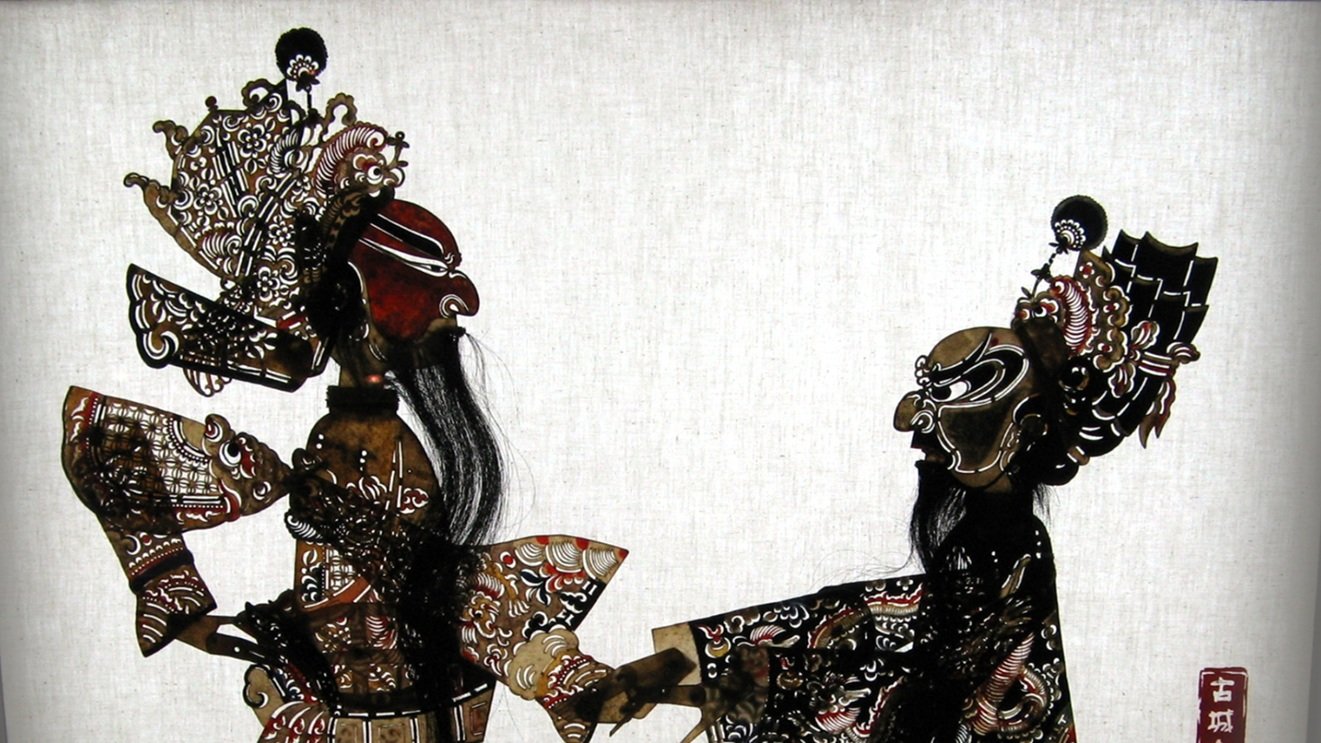
As the Chinese classic Romance of the Three Kingdoms begins: “The empire, long divided, must unite; long united, must divide. Thus it has ever been.” This captures a core insight of Chinese historical thought—that stability and fragmentation are recurring phases in an enduring cycle. Periods of unity and prosperity eventually strain under their own weight, giving way to fragmentation and turmoil, until a new order emerges and the cycle begins again.
Today, Chinese policymakers often describe the present as a “period of change unseen in a century,” framing it as a transition between eras. The lesson implied is not to resist change, but to understand its patterns and adapt to them. By studying the rhythms through which systems unravel and renew, leaders can anticipate upheaval and manage it—channeling disruption toward transformation rather than catastrophe.
Western thought, too, contains echoes of this perspective—from the ancients’ golden and iron ages to modern historians like Spengler and Toynbee, who traced the rise and decline of civilizations. The value lies not in choosing between these worldviews, but in combining them. The most perceptive leaders will be those who can shift between these lenses, discerning renewal where others see only collapse.
The End of Destructive Renewal
The cyclical view of history teaches that renewal can be built out of periods of conflict and reconstruction. But more importantly, this lesson from history is not meant to romanticize suffering, but to underline a critical point: even the gravest crises can prepare the ground for renewal, depending on how we respond.
China’s Warring States era (475–221 BCE) was a time of protracted violence and fragmentation as the Zhou dynasty’s authority disintegrated. On the surface it was an age of misery and collapse, yet amid the turmoil came a flourishing of thought and innovation. With no central authority to impose orthodoxy, thinkers roamed freely between rival states, debating how to build moral order and political stability. This “Hundred Schools of Thought” period produced enduring philosophies—Confucianism, Daoism, Legalism—that later formed the bedrock of Chinese civilization. In effect, the strife cleared away outdated institutions and made space for new ideas, much as a forest fire clears deadwood to allow fresh growth.
For centuries, many philosophers and statesmen—East and West alike—seem to accept this cycle of destruction and renewal as inevitable. Immanuel Kant, in his 1795 essay Perpetual Peace, even imagined two paths to lasting order: a universal moral awakening or wars so catastrophic that no nation could continue fighting. Indeed, through much of history, war often served as a brutal reset button. Societies devastated by conflict eventually recovered and forged new orders, as with Europe’s Treaty of Westphalia after the Thirty Years’ War.
Yet in today’s world, we must be discerning about which lessons we draw from the past—the tool we use to achieve renew under vastly different conditions. In the nuclear and AI age, war is not regenerative but existential. The destructive power of modern technology makes large-scale conflict irreversible—capable of ending civilization rather than renewing it. The cyclical lesson that renewal can arise from crisis still holds, but the means must change. We can no longer rely on destruction as the precondition for transformation.
Today, the gravest dangers to civilization come not only from war itself but from our collective failure to cooperate on transnational threats—from runaway AI and environmental collapse to pandemics and resource insecurity. The strategic imperative is no longer to win wars but to prevent them—while building the global capacity to manage shared risks and enable renewal through cooperation rather than conflict.
Unlearning Helplessness
One of the greatest dangers in turbulent times is the spread of hopelessness. The Munich Security Conference’s 2022 report, Turning the Tide – Unlearning Helplessness, warned of a “collective helplessness” creeping across many Western societies as they confront wave after wave of global challenges. Problems such as climate change and political polarization seem to be piling up faster than institutions can respond. This frustration and paralysis have fueled cynicism and the rise of populist movements, whose simplistic solutions only deepen divisions. When people begin to believe that nothing can be done, that despair becomes self-fulfilling—paralyzing the very action needed to resolve our crises.
Yet history reminds us that renewal is always possible. Here, the Chinese concept of 危机 (wéijī) offers a powerful reframe. Commonly translated as “crisis,” the term fuses two characters: 危, meaning “danger,” and 机, meaning “opportunity” or “turning point.” Another interpretation, “danger-change point,” captures its deeper implication—moments of peril are also moments of potential transformation. This dual meaning reflects the cyclical view of history: that times of disruption are not solely destructive, but can also be regenerative, depending on how societies respond.
Seen through this lens, our current global polycrisis—climate breakdown, runaway technology, inequality, geopolitical tension—need not signal the end of progress. It can instead be understood as a transitional phase, a moment of profound danger that also carries the seeds of renewal. Just as past periods of upheaval cleared space for new institutions and ideas, today’s crises offer a chance to rebuild more resilient foundations—if we act decisively and collectively.
Whether humanity emerges from this turbulent period stronger or weaker will depend on our ability to harness the “opportunity within danger.” Renewal in our time must come not from destruction, but from cooperation, innovation, and shared responsibility—doubling down on diplomacy when tensions rise, investing in sustainable technologies as old industries fade, and strengthening democratic norms when polarization threatens to tear societies apart.
Image credit: G41rn8, showing shadow puppets in the Sichuan Provincial Museum. The puppets depict Guan Yu and Zhang Fei in Romance of the Three Kingdoms.