What should be done with the cosmos? If humanity could turn the cosmos into whatever we want, what should we want? At a minimum, this is an interesting philosophical thought experiment. However, given the potential for radical breakthroughs in advanced technology, this has potential to also be a question that must be answered. This paper provides the rough contours of an answer.
At its core, this paper is about the possibility of extreme good things happening. This is an unusual topic. There has been extensive work on the possibility of extreme bad things happening—this includes global catastrophic risk and related “worst-case scenario” topics. But work on best-case scenarios is more scarce. There is even an asymmetry in the English language: the word risk means the possibility of some bad event, but we have no word for the possibility of some good event.
To start to answer the question of what to do with the cosmos, which the paper calls The Big Question, the paper asks a very challenging moral question, which it calls The Difficult Question: Given the opportunity to replace humans with something that is, in all morally relevant respects, superior, such that all humans would die, should this opportunity be taken? On one hand, if the replacement is completely superior, then, logically that would seem to be the better option. On the other hand, it is deeply uncomfortable—to say the very least—to argue in favor of human extinction.
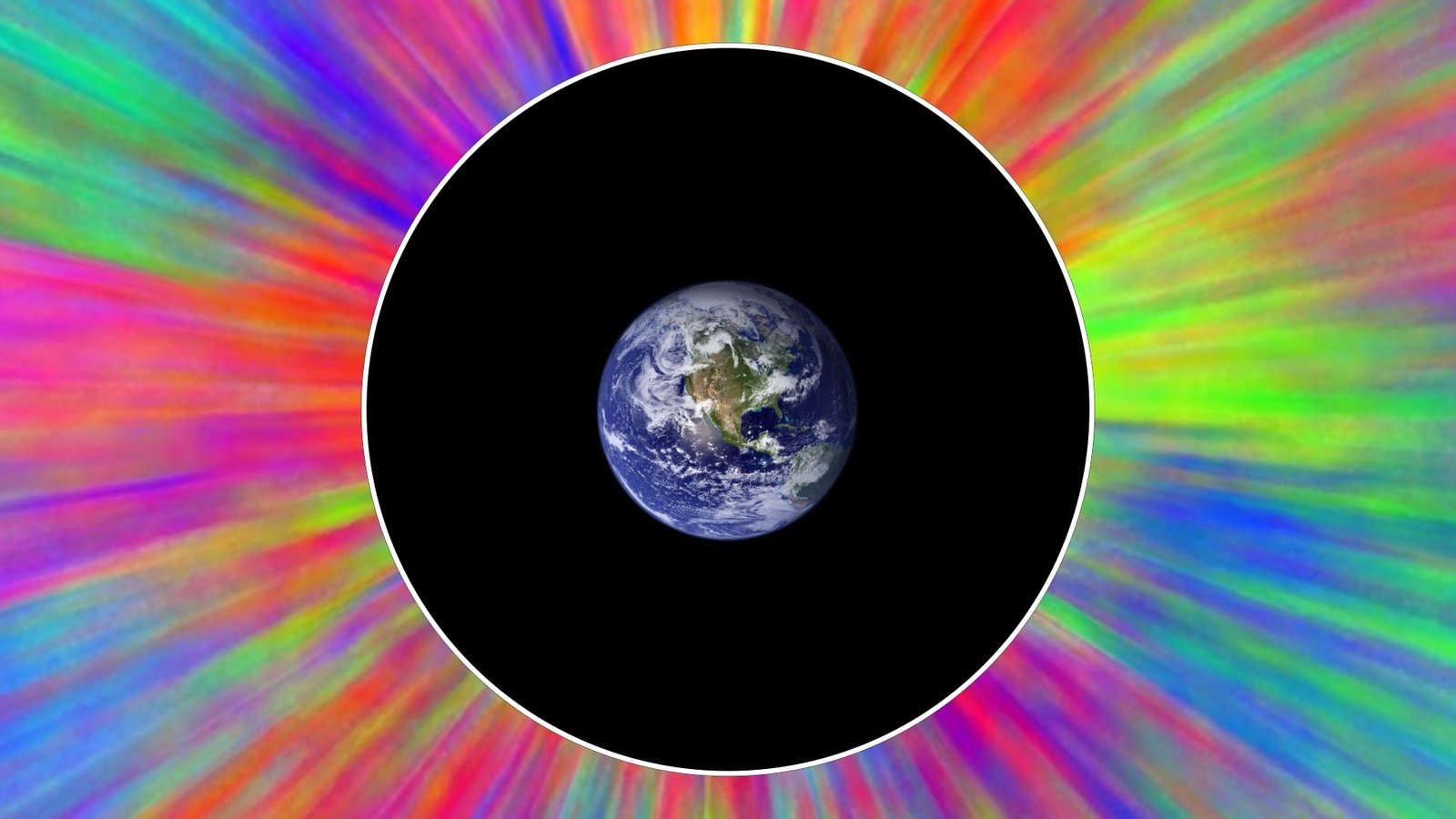
The paper proposes Earth-Cosmos Binary (ECB) as something in the vicinity of a best-of-both-worlds solution. The binary is a geographic division between Earth, plus some surrounding vicinity of Earth, and the rest of the cosmos. Earth-plus-vicinity would be preserved in more-or-less its current form: no human extinction, no extreme alteration of the biosphere. Outside the binary, across the rest of the accessible cosmos, would be a “radical optimization” with something superior to humanity and other Earth-life. That superior thing gets the vast majority of the available resources across the cosmos, but without harm to humanity and Earth as it currently exists.
Should the ECB be pursued? To address this, the paper considers a series of moral arguments for and against the ECB. The ECB is attractive because it offers a moral compromise between preserving Earth and spreading something radically superior. It may also offer a political compromise, for example if there is disagreement over how to use advanced technology. On the other hand, the ECB is unattractive if one holds the view that nothing in the cosmos should be radically altered, or the opposing view that Earth should also altered, or the view that legacy Earth-life should intermingle with the new radically superior entities. My own view is in favor of the ECB, but there is uncertainty.
The ECB is not a complete answer to The Big Question of what to do with the cosmos. It leaves open the matter of where to set the binary and what exactly to do on both the inside and the outside of it. Instead, it is a structure, a starting point for how to answer The Big Question.
The paper also provides several variants of the ECB with more complex geometries:
Earth-Cosmos Ternary, with a second boundary outside the first one. This enables the preservation of the radically superior entities made by humanity while enabling those new entities to create an even more super set of entities to spread outwards across the rest of the cosmos.
Earth-Cosmos Infinary, an infinitum of outwardly spreading boundaries, each containing a new set of radically superior entities created by the previous set.
Earth-Cosmos Bipienary, which has a binary between Earth and the rest of the cosmos, but the rest of the cosmos is divided into sections spreading outward from Earth, analogous to slices of pie spreading outwards from the center of the pie. This enables different moral visions for what should be done with the rest of the rest of the cosmos.
Earth-Cosmos Infipienary, combining the infinary and pienary geometries, such that each initial section of the cosmos is preserved while creating new sections of new radically superior entities.
Indigenous Cosmic Spheres Binary, which adds new binaries to preserve select extraterrestrial locations, such as planets containing extraterrestrial life.
Indigenous Cosmic Spheres Infipienary, combining the Indigenous Cosmic Spheres and the infipienary geometries.
Indigenous Cosmic Spheres Exoplanet Infinary, which begins with an Indigenous Cosmic Spheres Infinary spreading outwards from Earth and then transitions to an Indigenous Cosmic Spheres Infinary spreading outwards from some other location. This enables an extraterrestrial intelligence to define the ultimate character of the cosmos, on the premise that some extraterrestrial intelligence may have values that are morally superior to the values emanating outwards from Earth.
Indigenous Cosmic Spheres Multisource Infipienary, which maintains Indigenous Cosmic Spheres and sets boundaries between the Infipienaries emanating outwards from Earth and from various extraterrestrial value sources. This enables multiple sets of entities to have a say in what is done with the cosmos, including Earth-life and multiple extraterrestrial intelligences.
Academic citation:
Baum, Seth D., 2026. Earth-cosmos binary. Futures, vol. 178 (April), article 103783, DOI 10.1016/j.futures.2026.103783.
Download PDF Preprint • View in Futures
Image credit: tie-dye background: Alex Gorzen; Earth: NASA