Part of the GCRI Symposium on World Peace.
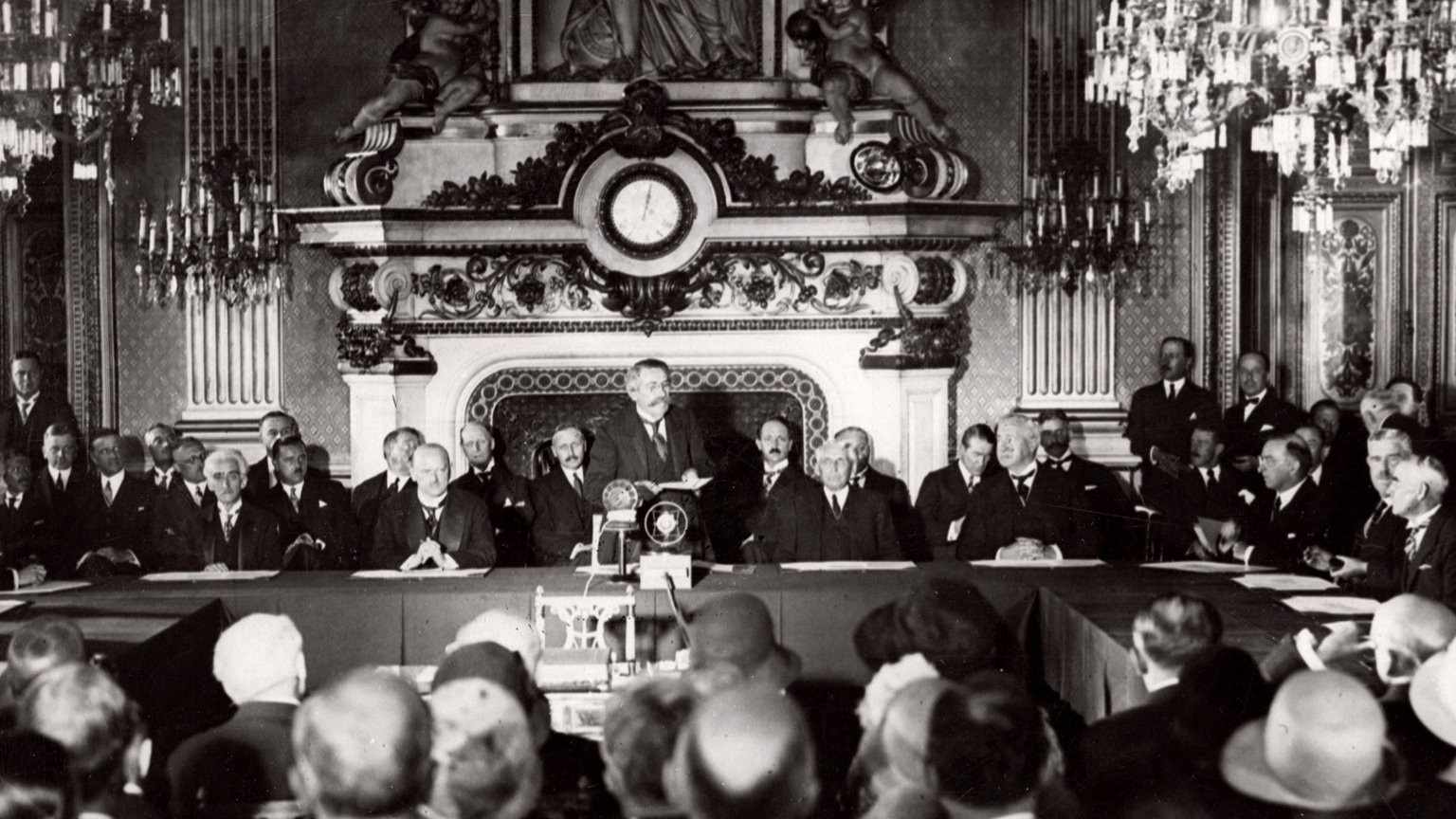
The 1928 Pact of Paris outlawed war. All the leading powers of the day signed or committed to adhere to the pact from Japan and Germany to the United States, Italy, and the Soviet Union. Yet, shortly after, the Empire of Japan invaded and occupied Manchuria in China, Italy invaded Ethiopia, Germany annexed Austria, and numerous signatories became enmeshed in World War II. Tens of millions of people died, and hundreds of millions more were injured.
Should the global catastrophic risk community pursue the goal of world peace? In this article, I will argue that no, it should not, and instead it should pursue certain other goals regarding issues of war, peace, and international relations.
World peace is defined here as the complete absence of war between all nations and peoples in the world, with war defined as violent conflict with more than 1,000 battle deaths within a calendar year. In the research literature, this is commonly known as “negative peace”; it is contrasted with “positive peace”, which includes the presence of certain conditions alongside the absence of war.
A world without war may seem desirable—war is indeed horrific. However, for world peace to be a good goal to pursue, it would need to be feasible and its pursuit would need to result in good outcomes. Furthermore, a group should not pursue world peace if it has better options. I will argue that this is the case for the global catastrophic risk community.
World Peace is Extremely Difficult, Potentially Impossible
War has been common throughout the history of humanity. One study found that, in the last 3,400 years, there were only 268 years with zero wars; 108 million people were killed during the 20th century. The World Wars were outliers, but since WWII, wars have still occurred frequently. These statistics suggest that a world with zero wars may continue to be elusive.
Furthermore, social dynamics can make it difficult to avoid war. Many groups of people continue to have different sets of values, beliefs, experience, and knowledge, all of which can lead to disagreement on distribution of social goods and the relative value of governmental policies. Major disputes may continue over issues of territory, access to common resources, justice, historical grudges, or simply ambition. Uncertainty about the intentions of states and their leaders can create misperceptions that can lead to wars. Indeed, even if states may enjoy a stretch of peaceful relations, they may still wish to retain significant military power due to uncertainty about whether the peace will last.
In recent decades, international relations scholars have proposed a variety of mechanisms to achieve world peace, or at least reduce conflict, but each of these has problems:
1) Democratic peace. This prominent literature proposes that mature democracies do not go to war due to some combination of shared institutions, norms, and public pressures against war. However, democratic states have also undertaken a variety of covert actions against one another, including covertly overthrowing other democratic states. Critics have also noted the Democratic Peace is strongest in post-WWII Western Europe and Anglophone countries, suggesting explanations other than democracy, such as American post-WWII dominance and common culture. Finally, democracy has been declining across the world in recent decades, further weakening the prospects for democratic peace.
2) International institutions. International institutions provide venues for states to work through disputes, and establish common international legal frameworks, pursue arms reduction, and, potentially, resolve conflicts. However, the international system faces major crises of legitimacy that reduce its ability to advance peace. Critics note the United Nations Security Council permanent membership has not changed, and view the veto power as allowing permanent members to wage wars of aggression with impunity. International arms control agreements have helped to reduce the risk of war, but many of them are in decline, including the Ottawa Convention banning anti-personnel land mines, various arms control treaties between Russia and the United States, and the Nuclear Nonproliferation Treaty. These setbacks underscore the practical difficulty of achieving world peace via international institutions.
3) Complex interdependency. This theory postulates that when states have major economic, social, and political ties to each other, they will avoid war. A classic example is the close relationship between the United States and Canada. However, these countries have had multiple conflicts over the years, and their relative peace can also be explained by other factors, such as their similar history, culture, language, and political institutions. President Trump has also recently discussed annexing Canada (and Greenland) into the United States. Although whether that is a genuine intention, political maneuvering, or just hot air is far from clear, it does suggest peace between the United States and Canada cannot be taken for granted.
Even if some combination of these or other factors could enable peace, it is still difficult to achieve peace across all nations and peoples worldwide. It would only take one state to thwart it. It is of course well beyond the capacity of the global catastrophic risk community to maintain 100% peace worldwide on an ongoing basis, and it may even be too much for the entire international community.
Seeking World Peace Could Backfire
A myopic focus on world peace could be harmful, increasing rather than decreasing global catastrophic risk and causing other problems for the world.
One pitfall is in the potential pursuit of world government. Proposals for world peace have sometimes involved a world government to resolve disputes and prevent military conflicts. This is consistent with the realist school of international relations, which argues that, without a world government, the international current international system is an anarchy, forcing states to guarantee their own survival by building up military forces. However, while a world government may be able to enforce world peace, it could backfire, such as by enabling the formation of an oppressive global totalitarian regime, as global catastrophic risk research has proposed. A world government would also not necessarily be better at reducing other global catastrophic risks. It may be better at achieving global collective action, or it could end up following a global consensus to prioritize other issues.
The pursuit of world peace could also reduce the capacity to mitigate various global catastrophe scenarios and other hazards, especially if states pursuing world peace prematurely relinquish their military capabilities. First and foremost, relinquishment could make it easier for other states to pursue military conquest and impose their dark visions on the world. Additionally, military means have long been used to support counter-proliferation of weapons of potential catastrophic concern. Examples include the 1991 invasion of Iraq, Israel’s 2007 strike on the Syrian al-Kibar nuclear reactor, numerous maritime interdictions, and, of course, the recent Israeli attack on Iran. Military force also may be required to limit and prevent rogue solar geoengineering and the potential global catastrophic harm it could cause. Some have also argued that military force may be necessary to prevent and respond to the creation of artificial superintelligences. If world peace is pursued myopically, it could result in the occurrence of these catastrophes.
Perhaps the above pitfalls could be handled by a more nuanced approach to world peace. However, in a project to pursue world peace, nuance would, in my opinion, likely be lost over time. If the current incarnation of the global catastrophic risk community were to adopt the goal of world peace, the nuance could be lost on future iterations of the community, or for policymakers and other stakeholders the community engages with. At minimum, if the community does pursue world peace, it must recognize and prepare for the risks of misinterpretation.
Better Options Exist
The difficulty of world peace and potential for its pursuit to backfire are reasons why the global catastrophic risk community or other groups should not pursue world peace as a goal. However, issues of war, peace, and international relations nonetheless merit attention from the global catastrophic risk community for three reasons. First, major war is one of the few examples where globally catastrophic harm has already occurred. Second, war is also wrapped up closely with several other global catastrophic risks. Third, war and conflict may, at times, be necessary to reduce global catastrophic risk. A successful approach should focus on goals that are more tractable and more important for global catastrophic risk than world peace. I propose three such goals:
Goal 1: Reduce the Risk of Wars of Catastrophic Potential. When thinking about war, the global catastrophic risk community should focus on limiting wars of catastrophic potential. Although any death in violence is a tragedy, rarely is it a global catastrophe. In fact, although humanity has experienced perhaps hundreds of thousands of wars, Wikipedia’s list of deadliest wars suggests only 10 wars in the history of humanity have exceeded 10 million deaths and only two resulted in the death of at least 10% of humanity (the Three Kingdoms period in China and the Mongol invasions). Of particular concern should be wars between great powers; ; wars involving nuclear or contagious biological weapons; and wars that threaten globally critical infrastructure necessary to prevent catastrophes, such as space-launch facilities for near-Earth object redirection, and, if pursued in earnest, infrastructure for solar radiation management.
Goal 2: Facilitate International Cooperation on Catastrophic Risks. International cooperation can be important for global catastrophic risk independent of whether it can lead to world peace. When international institutions are strong, they can help the global community to address risks like climate change, artificial intelligence, and nuclear war. Arms control agreements can also pertain directly to global catastrophe scenarios. Conversely, excessive international cooperation could lead to harmful world government.
Goal 3: Improve Understanding of the Politics of Catastrophes. If war is driven, in part, by external threats, then arguably global catastrophes are the greatest threats around. The global catastrophic risk research community could play an important role in understanding how catastrophic threats shape global politics. Although the international relations discipline has long considered a variety of global catastrophic risks, often it tends to be stovepiped to one or another risk. The global catastrophic risk community could provide a more holistic, cross-cutting view, especially one more connected to transdisciplinary views on risk, which remains a nascent topic in international relations.
The global catastrophic risk community cannot single-handedly eliminate the risk of catastrophic wars, enable international cooperation across all catastrophic risks, and provide perfect clarity on the politics of catastrophes. However, it can make some constructive contributions on all three matters. These would be worthy goals instead of attempting to achieve world peace.
Image credit: unknown, showing French Foreign Minister Aristide Briand speaking at the signing of the 1928 Pact of Paris.