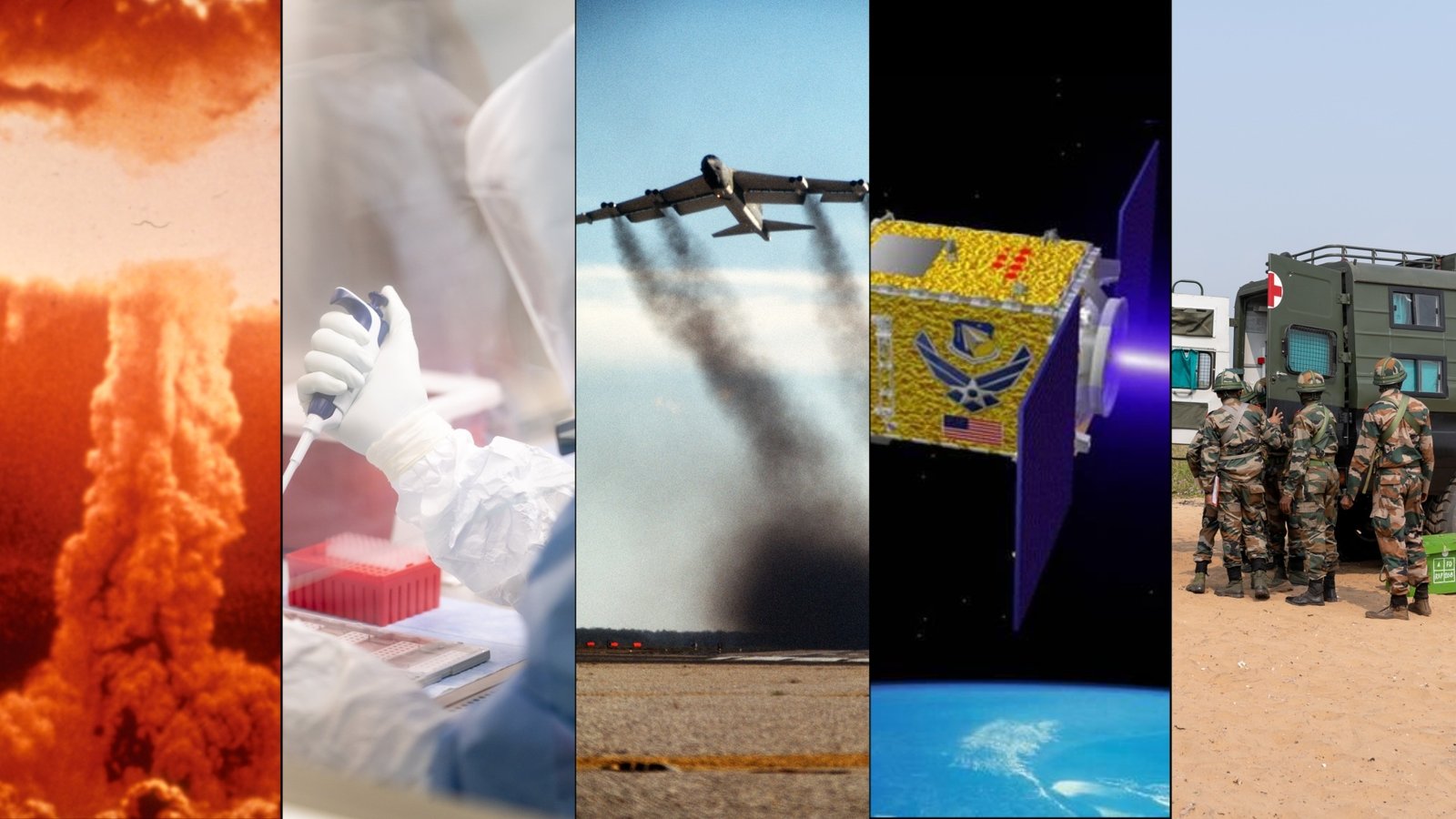
Part of the GCRI Symposium on World Peace.
I come to the field of global catastrophic risk with experience in nuclear disarmament and non-proliferation policy engagement. As Executive Director of the British American Security Information Council (BASIC), I worked extensively in Iran and the Middle East, across Europe and the US, and participated in high-level international initiatives such as the 16-state Stockholm Initiative for Nuclear Disarmament. It is from this experience, along with my broader involvement in and observations of the international community, that I have come to a set of conclusions about how members of the international community could better engage each other to advance peace and address global catastrophic risk.
First and foremost, let me say this: I do not expect that there will be any significant progress on nuclear disarmament unless and until the nuclear-armed states change some established mind-sets and get along with each other better. Unless and until relations improve, all of those nuclear disarmament initiatives, as thoughtful and well-meaning as they undoubtedly are, will only get us so far. They can have intrinsic value, they can also help build those better relations… but in the end the big gains will happen when governments see the critical importance of accommodation, cooperation, and mutual respect. Furthermore, improved relations would have enormous benefits for many other issues, including other hazards that contribute to global catastrophic risk. That leaves the practical question of how to bring about better relations.
To that end, I am proposing a set of views that I am calling “responsible cosmopolitan leadership”.
Humanity is caught in mental traps that poison our international relationships. Two dominant narratives are particularly harmful, driving terrifying trends in Great Power confrontation and catastrophic risk. The most influential, so-called “realism”, is rooted in assumptions that humans and their governments are, and perhaps also should be, motivated narrowly to pursue hard power and naked short-term self-interest. A related view, isolationism, sees the rest of the world as a source of threat, and prioritizes a defense of the homeland. Another competing view arising from a more cultural righteous neo-colonialism and expressed in western states as “liberal interventionism” or “neoconservatism”, seeks to make “them” more like “us”, including through military force. Those that resist are seen as aggressive and malign. Both of these dominant views have us distrusting diplomacy, global democracy, international law, and thus have us preparing for and initiating war. The collective “dominate or be dominated” mindset has people believe in “peace through strength”. And it is a self-fulfilling, unending war.
The essence of responsible cosmopolitan leadership is threefold, as the name suggests. First, it asserts that governments have responsibilities to competently manage international affairs on issues including but not limited to global catastrophic risk. This includes, for example, careful analysis and military postures that balance the value of deterring war with the risk of deterrence failure and the harms to the collective capacity of the global community to address the polycrisis. It means developing a more integrated understanding of deterrence and other tools across multiple domains that reinforce global stability and active support for the shared norms and mutually-agreed rules of the road. This will be more effective if publics are more effectively recruited to the global stability and responsible cosmopolitan agenda by neutralizing negative stereotypes of other cultures and deepening commitment to responsible foreign policies. This would strengthen threats of sanctions against aggressor states that could be more effective and less dangerous than military and nuclear threats.
Second, it is cosmopolitan in recognizing the common humanity of all peoples that transcends the interstate competition that can boil over into conflict. States should embrace a cooperative and multilateral international community, and they should engage each other with humility and mutual respect even when there may be significant ideological and policy differences between the countries. The strategic value of compassion in achieving these outcomes cannot be over-estimated. No state is perfect, and no state should be expected to be perfect; instead, all states can engage each other to collectively identify and address their various shortcomings and pursue a safer and better world.
Third, leadership is required to get the ball rolling. States should be wary of extreme unilateral disarmament, but they should also not wait for their rivals to change before they do so themselves. Diplomats often make grand gestures at events such as the Summit of the Future, and in agreeing on ambitious Sustainable Development Goals, but too often, states let these gestures be sacrificed at the first hedge when they come into contact with hard-nosed exercise of power driven by the belief in force and self-interest. This is not a law of nature. It is a choice driven by attachment to ‘realist’ ideologies. States could instead lead by following through on their mutual commitments and in developing and following international law. Nuclear-armed states, in particular, have a legal and moral responsibility to lead on their obligations to engage in disarmament negotiations.
This set of views will be seen as idealistic by many people. It may challenge sensitivities. Of course, it runs counter to so many of the trends we see today. But these are not impossible trajectories… it just requires a little imagination, collaboration between groups (states, international organizations, non-profits, media companies, and ordinary citizens) across borders to build diverse communities that spread these ideas. This could include citizen activity across the internet, including social media. As public awareness of the variety of drivers of global catastrophic risk rise, and that survival will demand better cooperation, the potential for evolution and viral spread of these ideas improve.
Our most fundamental problem is the mindset that attaches to the past and present as if positive change is impossible. It kills optimistic energy. Yet, in reality, change is inevitable. Our societies are currently on an extreme and unsustainable trajectory. Change will come. The only question is what type of changes will we see, and how will we collectively roll with those changes and collaborate to nudge them in a manner that improves our chances of survival. We can continue with the same mindsets and behaviors that now threaten the world with catastrophe, or we can change ourselves to keep the world safe and prosperous. Let us make the right choice.
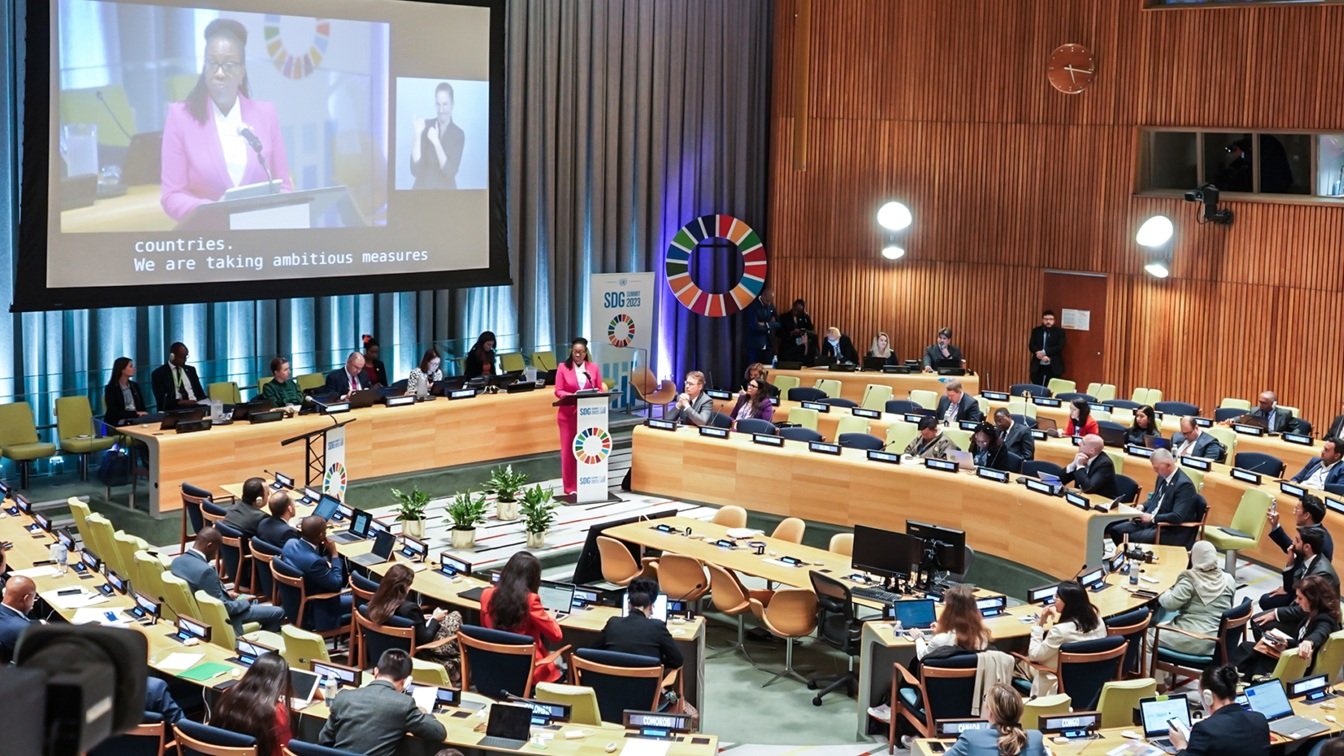
Image credit: Ministerie van Buitenlandse Zaken (Netherlands Ministry of Foreign Affairs), showing the UN General Assembly discussing the Sustainable Development Goals