
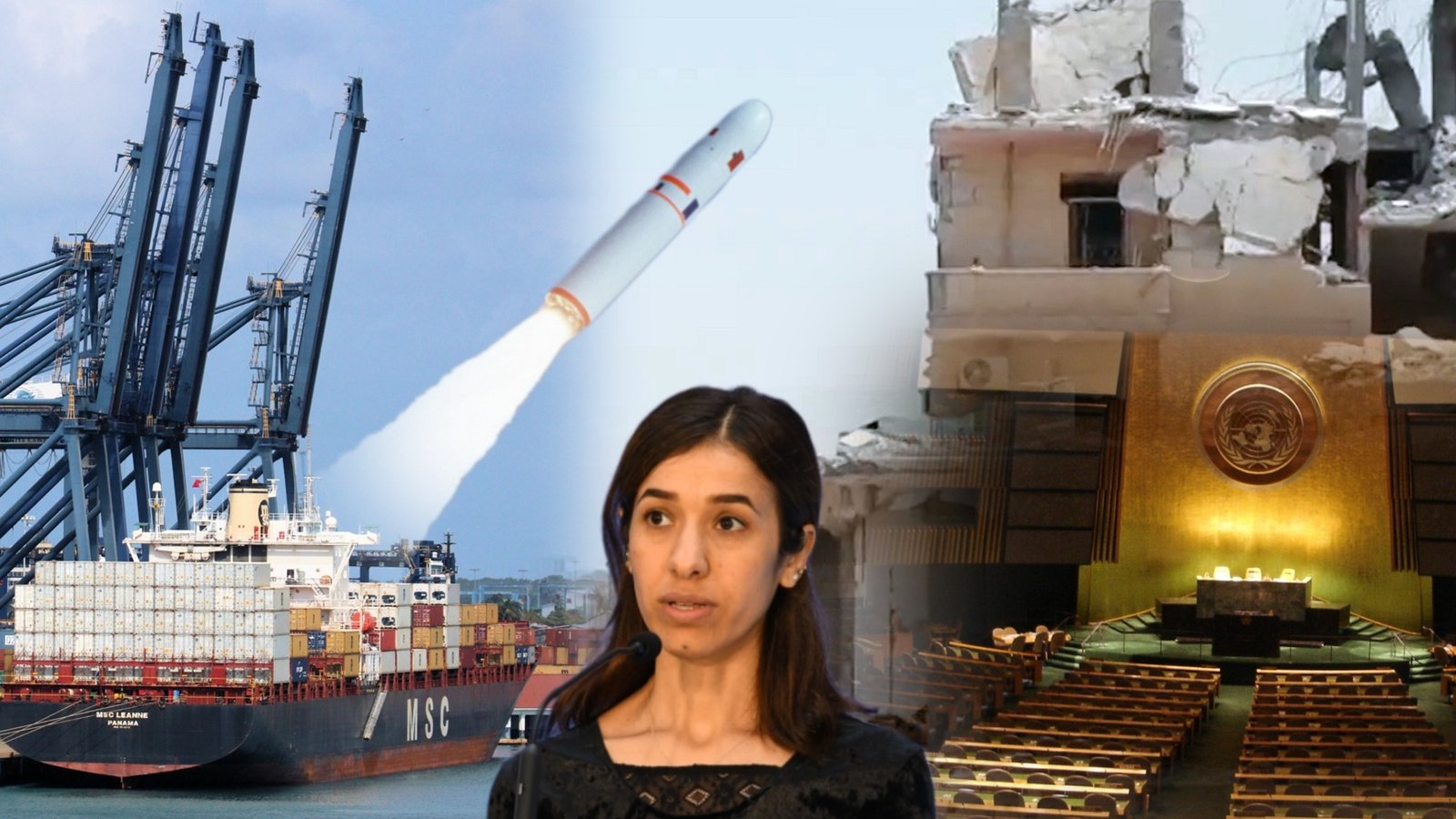
Part of the GCRI Symposium on World Peace.
World peace is often seen as a lofty theoretical ideal, but it’s worth asking, in more practical terms, What can we do? And so, this article is an initial attempt to pull together practical concepts for advancing peace. It is a broad-but-shallow survey that inevitably overlooks many details and nuances that are important for practical decision-making, but it may nonetheless provide a useful overview of how to advance peace.
The article presents 17 concepts. Most come directly from existing research literature, while some are my own ideas based on my read of the literature and related resources [1]. Some can be pursued by individuals or private groups, whereas others are more for governments. The discussion includes my critique of the concepts—some ideas might be prominent in the literature but have clear limitations.
For purposes of this article, peace is defined as the absence of war. Peace can also be defined in other ways, but this is a good basic definition for guiding the discussion. Also, for the sake of brevity, the article sets aside the idea of just war, i.e. that some wars may be worth fighting.
One big takeaway: there are no singular universal solutions to achieving world peace. Instead, there are many things that can help. Likewise, there are no guarantees that world peace can be achieved. I think it’s constructive to view world peace similarly to the UN Sustainable Development Goals of ending poverty and hunger, or the climate change goal of net zero greenhouse gas emissions. These goals all serve as desirable endpoints and useful organizing frameworks for the international community. Even if these goals are not achieved in their entirety, progress towards them is still valuable.
Another takeaway: we should study solutions for advancing peace so that we may seize opportunities as they arise, especially where they dovetail with other things we are pursuing. World peace is a worthy goal, but it is not the only goal. We all have a multitude of responsibilities. The aim should be to know what helps advance peace so that we can work that into our broader activities, and to only go further out of our way for it when we have special opportunities. I think that is a generally appropriate perspective to solutions and strategy.
People active on global catastrophic risk may be especially interested in aspects of peace related to avoiding nuclear war and resolving international disputes to facilitate cooperation on the risks. Still, it’s good for us to be aware of the full spectrum of opportunities. If nothing else, we can share that information with other people in our networks to help them find their best opportunities.
With that in mind, here is the list, loosely organized by certain themes.
Ideals
(1) Normative principles. Following prior work by Immanuel Kant (Perpetual Peace, 1795), Alex Bellamy has proposed a set of normative principle for world peace, such as “No one may violate the rules of international law relating to the use of force and conduct of armed conflict”. These sorts of principles can provide a useful framework for countries that wish to pursue peace, but they may be less helpful for persuading countries to pursue peace in the first place.
International Institutions
(2) World government. Just as national governments can maintain peace domestically, it is often proposed that a world government could do the same globally. The UN Security Council is responsible for maintaining international peace and security; it can play a constructive role, but it is limited by lack of consensus. Proposals for more extensive world government are similarly held back by lack of international consensus. Furthermore, a more extensive world government may also be harmful by eliminating the capacity of independent nations and coalitions to restrain each other, as research on global catastrophic risk has long recognized.
(3) Institutions for dialog. International institutions like the UN, the EU, and ASEAN provide (among other things) fora for dialog and building trust, helping countries resolve disputes peacefully. The mere existence of international institutions is not sufficient—countries also need the motivation and skill to use them effectively—but they can still play a helpful role.
(4) Institutions for accountability. The International Criminal Court is the primary example. If states and their leaders are held accountable for the harms of the wars they start, they may be less inclined to start them in the first place. However, this creates a dilemma: fear accountability incentivizes leaders to prolong wars and avoid justice. Furthermore, the ICC lacks full international support, including from the US, and may be biased, especially with respect to Africa.
Military Measures
(5) Deterrence. The term Pax Atomica refers to the idea that nuclear deterrence has enabled peace since World War II, at least for major wars. However, somewhat paradoxically, nuclear deterrence may also enable smaller wars (e.g., in Korea, Vietnam, and Ukraine), which nuclear powers can fight knowing that neither side wishes to escalate. Furthermore, as GCRI research documents, nuclear deterrence comes with a nonzero risk of failure, resulting in nuclear war. Non-nuclear deterrence may be more likely to fail, albeit with less harmful consequences. It may be possible to strengthen deterrence by developing defensive military technologies and capabilities, as the research concept of offense-defense balance.
(6) Peacekeeping. Some research finds that peacekeeping operations can contain wars, reducing their duration and severity, though the exact effect is debated and operations have slowed over the past decade. UN peacekeeping operations are authorized via the Security Council, but consensus has become elusive. Peacekeeping may also be ineffective for wars involving advanced militaries, such as Russia-Ukraine.
Politics and Economics
(7) Democracy. International relations research has long studied the idea that democracies are more peaceful, especially towards each other. But democracy does not guarantee peace—for example, in recent decades, the US has fought many wars (and just threatened to invade democratic Greenland), whereas China has fought zero. Furthermore, promoting democracy can be extremely dangerous. For example, if the US was to aggressively push democracy in China and Russia, then Beijing and Moscow could view it as an attempt at regime change and a threat to their national security, which they might respond to with war.
(8) Domestic political success. A diversionary war is a war initiated by a national leader to divert domestic attention away from other issues that pose domestic political problems for the leader. Similarly, a leader may prolong a war to avoid domestic political problems, as has been alleged of Netanyahu in Gaza. It follows that some leaders may be less inclined to wage war if they have more domestic political success. Likewise, countries may be able to avoid war by choosing better leaders.
(9) Economic development and interdependence. Economic development can reorient countries from conquest to trade and give them more to lose if war were to occur. A shift toward regional development may at least partly explain why East Asia went from being the site of 80% of global battle deaths during 1946 to 1979 to having zero significant military conflicts since then. However, economic prosperity can also make war more financially affordable. Furthermore, if economic wealth is distributed unequally between groups within a country, it may make civil war more likely.
Relationships
(10) Diplomacy. The basic intuition that diplomacy can reduce violent conflict is seen in a quote from former US military leader James Mattis: “If you don’t fund the State Department fully, then I need to buy more ammunition.” For example, former US Ambassador to the Soviet Union Llewellyn Thompson helped the US navigate the Berlin Crisis and the Cuban Missile Crisis; more recently, Qatar has helped mediate a wide array of conflicts.
(11) Relationship management. One book argues that adversarial nations can overcome their differences much like partners in a failing marriage, such as by each partner exercising humility, owning their own shortcomings, listening deeply to each other, and maintaining a growth mindset. For example, a country’s media could scrutinize its own countries foreign policy shortcomings more critically instead of pointing fingers at adversaries, something that does not always happen.
(12) Dignity. One line of research posits that violence is often motivated by feelings of humiliation, e.g. German humiliation post-WWI, leading to the rise of the Nazi regime, and the Hutus under Tutsi rule, leading to the Rwandan genocide. This may be countered by cultivating a sense of dignity.
Cultural Orientation
(13) Cosmopolitanism. A cosmopolitan outlook may advance peace by recognizing the common humanity of people from different backgrounds, in contrast with ideologies favoring an in-group “us” over an out-group “them”, such as nationalism or racism, or favoring one form of government over another. One body of work advancing cosmopolitanism is the genre of travel videos featuring dialog between ordinary people from different parts of the world, such as in the YouTube channels Drew Binsky, Eli from Russia, Little Chinese Everywhere, and Yes Theory.
(14) Gender equality. A common research finding is that more gender-equal societies tend to be less violent, and that violence against women can be a precursor to international violence. Of course, men can be peaceful and women can be militant, but violence against women is a massive problem and gender equality is clearly worth promoting for its own sake; if it happens to also advance peace, all the better.
Cultural Interventions
(15) Peacetime fulfillment. In studies of why people choose to choose to pursue war and other political violence, one recurring theme is for excitement and adventure and glory, to alleviate peacetime boredom and meaninglessness. Conversely, some motivation for war may be reduced by providing peacetime opportunities for personal fulfillment, especially for people whose thrill-seeking personalities might otherwise gravitate toward violence. For example, militaries could place greater emphasis on humanitarian missions in far-flung parts of the world, such as Operation Christmas Drop.
(16) Publicizing harms. An unfortunate tendency of news media and cultural portrayals of war is to romanticize it: the heroism of soldiers, the skill of generals, the glory of victory. This overlooks the brutal reality of war for soldiers and especially for civilians, making war seem more desirable than it should. Thus, there is a role for media and culture that raises awareness of the harms of war.
(17) Positive narratives of peace. To counter the romanticization of war, there can be a romanticization of peace. For example, we might imagine a film that presents the simple joys of a family living a normal life and juxtaposes that alongside a political decision to not go to war that made this happier life possible.
Concluding Thoughts
In addition to the thematic scheme used above, the 17 concepts can also be understood in terms of:
(A) Supporting people who want to pursue peace, such as normative principles to guide action, international institutions where diplomacy can improve relationships, and empowering women.
(B) Persuading people to want to pursue peace, such as cultural interventions to enable peacetime fulfillment, publicize harms, and promote positive narratives of peace, and efforts to give people a sense of dignity or spread a cosmopolitan orientation.
(C) Restraining people who don’t want to pursue peace, such as world government or deterrence to prevent war from starting, peacekeeping operations to contain wars, and accountability measures to impose costs on would-be aggressors.
I am tempted to emphasize (B). Peace seems most durable if people actually want it. Everything else feels like a half-measure designed to reduce the risk of war without reliably ending it. A cosmopolitan orientation is especially attractive for also being a basis for international cooperation, including on global catastrophic risks. However, as is often the case, the best course of action probably involves a mix of everything, with specific options selected on a case-by-case basis.
There are many interconnections between the 17 concepts. For example, if countries are deterred from starting wars, it can create space for diplomacy and improving relationships, which could in turn bring a more cosmopolitan orientation. Also, female peacekeepers and diplomats may be able to play important and distinctive roles. These interconnections underscore the importance of a “mix of everything” approach.
***
[1] I especially recommend Alex Bellamy’s book World Peace (And How We Can Achieve It). For a window into the sprawling research literature on war and peace (which I have not attempted to fully read), see Jack Levy’s 193-page syllabus/bibliography. One notable set of topics in the literature not included in this article is on balance of power vs. unipolarity.
Image credits:
Container ship (left): ImagePerson; image shows a container ship in Colón, Panama near the Panama Canal, symbolizing (9) Economic development and interdependence.
Missile (center top): US Department of Defense; image shows a Trident II intercontinental ballistic missile, symbolizing (5) Deterrence.
Woman (center bottom): US Department of State; image shows Nadia Murad, a leading advocate against sexual violence in war, symbolizing (14) Gender equality.
Destroyed building (top right): Voice of America; image shows Raqqa, Syria, during the Syrian civil war, symbolizing (16) Publicizing harms.
Auditorium (bottom right): UN Headquarters, symbolizing (3) Institutions for dialog.



_intercontinental_ballistic_missile_clears_a_launch_pad_during_the_second_developmental_test_flight_of_the_system._The_missile_is_designed_for_submerged_firing_f_-_DPLA_-_c440c0366ba138f1fd80fdeee3bcf9c1.jpg)
.jpg)

.jpg)